
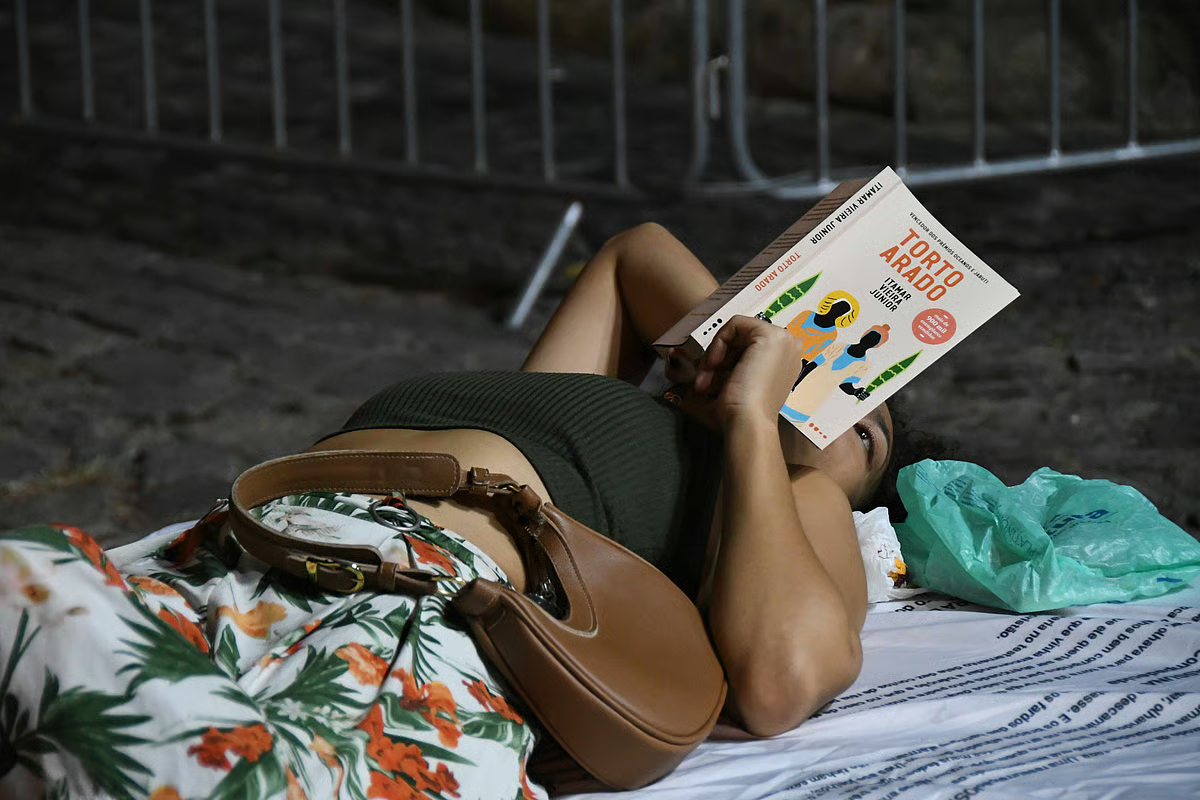

Lots of books, sellers of cold water, music, the heat that makes you sweat and also warms your heart. Gypsies walk around in long, shiny dresses, indigenous people proudly carry their headdresses and face paint, quilombolas share their ancestral knowledge with enthusiasm. Others reveal sun marks on their skin typical of those who live close to the sea and sand, while Portuguese men and women and people from African countries live with this multiple Brazilianness. All this in the old church complex that now houses a cultural center in the old part of the city of João Pessoa, in Paraíba.
Such was the atmosphere at the Paraíba International Literature Festival (Fliparaíba), which, over three days, brought together names from the Portuguese speaking world to talk about literature, but not only that. The themes, initially, don’t seem to make sense together, especially due to the format of the event, full of activities that mix various artistic expressions.
The subjects are diverse: democracy, ancestry, freedom, culture. Those who participate understand that these are interconnected themes, united by a powerful thread: the Portuguese languagespoken with various accents and sounds, in which these differences are seen as richness, and not as a factor in diminishing the culture or intellectuality of the other.
“Fliparaíba has become, in just three years, a vital meeting point for the Portuguese language. The public that filled the Centro Cultural São Francisco showed that Paraíba recognizes in literature a symbolic, democratic and urgent territory”, he tells DN / DN Brazil curator José Manuel Diogo, Portuguese who lives between the two countries.
The choice of curatorship, to guarantee the presence of people from Paraíba at all ten tables at the festival, aimed to value the literary richness of the land that hosts and promotes the event. “The intellectual community of Paraíba fully adhered to the model that we proposed in the Brasil Portugal 200 Years Association: tables that local, national and international voices intersect; themes that reflect Brazilian and Portuguese-speaking emergencies; and a program that combines reading, orality and cultural democracy. The result is a robust, contemporary and necessary festival”, resume.
The central theme “our land, our people”, according to the curator, “gained body, voice and future with the dialogue between authors from Paraíba, Brazil, Portugal and Africa“. José Manuel Diogo also launched the book at the fair Thirst Partyinspired by a trip through the interior of Paraíba.
And it was precisely from the interior of Paraíba that some of the names that enriched the event came, not only with books, but also with indigenous and gypsy dances, with teaching woodcuts for children and adults, and with hours of conversation about democracy and ancestry. How Marcelo D2 sings on the album Iboru: “to create the future, we need to rescue the past”, a logic that guides much of the festival’s reflections.
Click here and follow the DN Brasil channel on WhatsApp!
As with any literary festival, It is also the time to think about the possible worlds that can be created in literature and that inspire real life. “This is a festival of subtleties”, defined Pedro Santos, state secretary of Culture of Paraíba, referring to the mix and plurality of activities.
The expressive participation of the public at the tables reveals the interest in listening to those who write. One of the conversations, “Women who found worlds — The world is born from the body”, brought together writers from three different countries: Andrea Nunes, from Recife; Inês Pedrosa, from Portugal; and Odete Semedo, from Guinea-Bissau. They spoke about their works, permeated by knowledge of the different forms of violence that women suffer in their countries and around the world, and about how literature, in its entire process, from research to publication, can help improve the world.
The launch of more than 150 books shows that the love of reading is alive and well. In addition to the news, many already known works circulated, such as the trilogy by Bahian writer Itamar Vieira Juniorone of the participants at the tables. He almost passed three hours signing your books. The line entered the building and went around the space that, over the centuries, housed Catholic masses and, today, celebrates plurality.
The revitalization of this church, which hosts the event for the second time, is an example of a recent transformation in the city. João Pessoa has More and more historic buildings are being restored to transform them into community spaces, maintaining their traditional features and giving them new cultural purposesexplained governor João Azevêdo.
At the opening ceremony, he highlighted that welcoming “thinkers from all over the world” makes the city great. He also reinforced the importance of discussing democracy, one of the festival’s central themes, which, in his view, “cannot be weakened”; investment in culture, he said, is one of the essential ways to strengthen it.
For 2026, the forecast is that João Pessoa will once again become the Lusophone capital of literature, discussing essential themes of society and celebrating the Portuguese language in all its forms, without prejudice, as a necessary utopia for the times in which we live.
amanda.lima@dn.pt
*The journalist traveled at the invitation of Fliparaíba.