
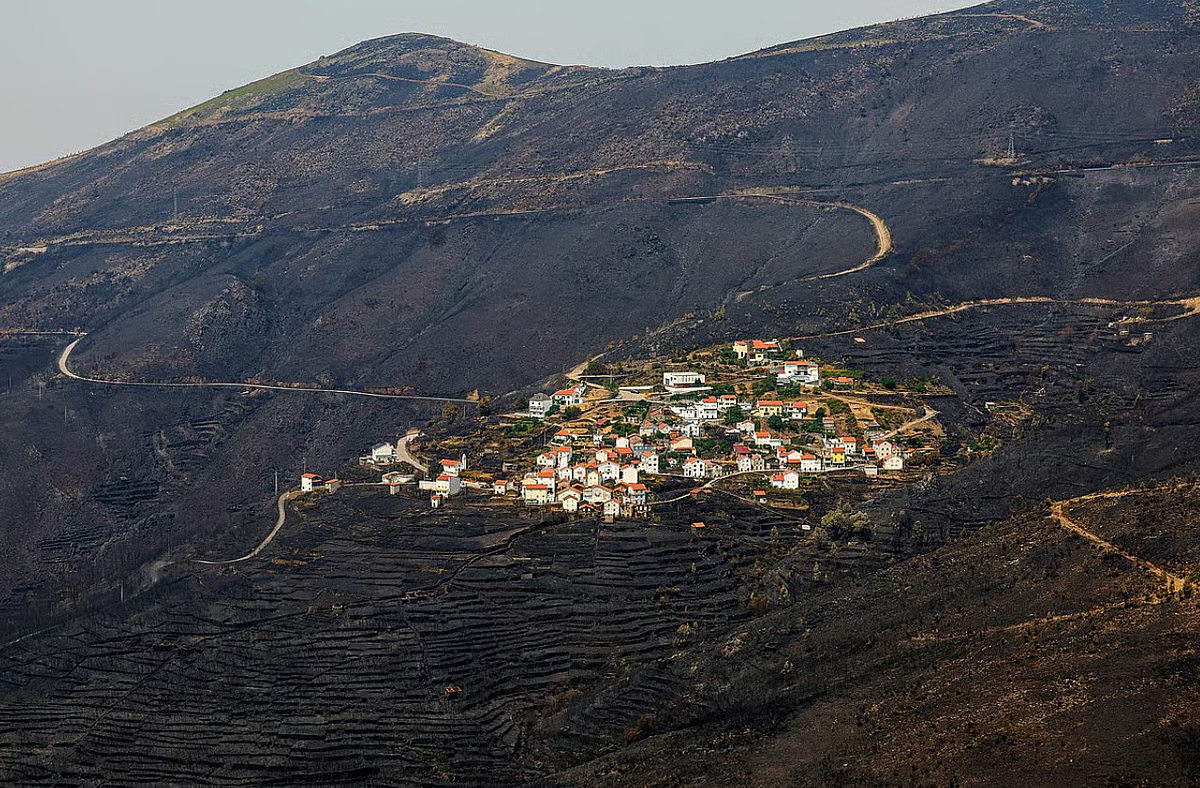

Responsible for some of the largest forest fire investigations in California, the CAL FIRE specialist was in Portugal to participate in the 1st International Conference on the Causes of Forest Fires – WIC 25. Organized at the Faculty of Arts of the University of Porto, the event last week brought together experts from 25 countries to share knowledge about what actually causes fires to ignite and how to improve the process of investigating their causes.
In this interview with DNShawn Zimmermaker explains why certain fires become “unstoppable”, how to identify the origin of a fire and what Portugal can do this winter to reduce the risk next summer.
California is known for fast, intense fires that often consume large areas. What makes this area so prone and vulnerable to large fires?
California brings together several factors that, together, create ideal conditions for rapid and extreme fires. The main one is the climate: prolonged dryness, years of severe drought and massive death of trees due to pests. Added to this are the winds Diablo and other hot and dry winds coming from the desert, which, when they descend towards the coast, violently accelerate the spread of the flames. When we have these large wind events, there is very little that can be done immediately in terms of firefighting, precisely because of how quickly the flames are propelled.
There is also a human factor: more people living in urban-forest interface areas. This increases the potential for ignition and forces combat teams to prioritize lives and property, taking resources away from direct control of the perimeter. Therefore, it is not a single element: it is the combination of climate, dry fuel, strong winds and human occupation that makes everything so dangerous.
When studying large fires, whether in Portugal, USA, Greece, Spain or Australia, are there common patterns in the causes or are the realities different depending on the geographies?
We observed some consistent patterns, although the causes also changed over time. There are examples where we have seen large reductions, such as fires linked to the railroads or the timber industry — areas that historically generated a lot of fires, but which have drastically decreased thanks to new rules and practices.
Then, there are causes that remain very present. One example is fires: in California we allow homeowners to burn debris, and this causes a lot of fires, especially in the spring and fall. They normally do not cause large fires, but they represent a significant part of ignitions.
Some of our most serious fires have been caused by electrical lines. These failures often happen on high wind days, when debris or trees hit the lines. If a fire starts there, the wind itself tries to make it grow quickly.
And there is also arson, which represents between 10% and 15% of our ignitions. Overall, the main causes have remained fairly consistent: equipment, vehicles, power lines and debris burns.
And is this reality different from California to Portugal or Australia? Do research teams tend to identify the same types of patterns across the world?
In fact, I can only speak for the United States. Generally speaking, I think most state agencies in the U.S. see similar trends.
A Portuguese researcher, Abílio Pereira Pacheco, said in an interview that “it is easier to go to the Moon than to develop technology to stop a fire when it reaches the treetops”. Do you agree? What explains this technological impossibility?
Yes, when a fire is in the pantry and spreading quickly, the intensity is so high that we cannot place crews or vehicles close by. It is too dangerous and cannot be attacked directly. Aerial resources are also very limited, because the wind that drives the fire can deflect water or prevent aircraft from reaching the target.
In my experience, the best way to deal with these fires is to wait for them to descend from the canopy to the ground. To do this, we need a barrier or mitigation zone that allows the fire to lose intensity. Only then can we really combat it. And sometimes that means working miles ahead, clearing lines with heavy machinery to prepare the ground.