

On a bustling December afternoon, Reason Khumalo He was doing last-minute Christmas shopping in downtown Johannesburg when two drunk men started walking towards him.
He didn’t suspect anything. It was a holiday and the streets of the Hillbrow neighborhood were full of people. But one of them pulled out a gun and the crowd dispersed.
“The next thing I remember is that I ran out and my shirt was soaked in blood,” remembers Khumalo, a 45-year-old Uber driver, who had been shot, as reported. Financial Times.
Khumalo survived after waking up days after an induced coma. He did not suffer the same fate as the almost 27,000 South Africans murdered last year, victims of violence that has plunged the country into a national crisis.
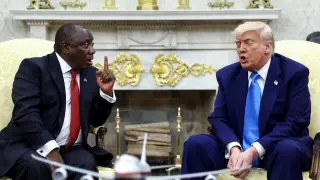
Instead of addressing the problem seriously, South Africa has been the target of an international disinformation campaign: US President Donald Trump has promoted the now-debunked idea that there is a “genocide” against the country’s white farmers.
Far from that narrative, Statistics show a much harsher reality.. South Africa has one of the highest homicide rates in the world – 45 murders per 100,000 inhabitants – and three out of four victims are black or mixed-race men of humble originlike Khumalo.
The country also faces one of the highest rates of femicides worldwide.
Since Cyril Ramaphosa He assumed the presidency in 2019, promising to drastically reduce levels of violence.
But instead of decreasing, murders have increased. Citizen frustration with the inability of the African National Congress (ANC) to stop the violence has been such that the party lost its parliamentary majority for the first time since the end of apartheid in the 2024 elections.
According to Guy Lambcriminologist at the University of Stellenboschthe South African government’s focus on responding to unfounded allegations of attacks on whites has diverted resources and attention from the real crisis: the murders of black women and men in marginalized areas.
“Political and financial resources are dedicated to responding to media noise, instead of protecting those who are really in danger”, he laments.
The ghost of apartheid
The roots of the problem lie in the past. During apartheid, the state used violence to repress the non-white majority, achieving a murder rate of 70 per 100,000 people.
After the beginning of democracy in 1994, homicides fell, but they rose again in 2011 with the economic slowdown and the deterioration of institutions.
Today, just one in ten violent criminals is arrested or convicted.
Ramaphosa’s mandate has been marked by the institutional weakness inherited from the mandate of Jacob Zumaformer president accused of looting the State.
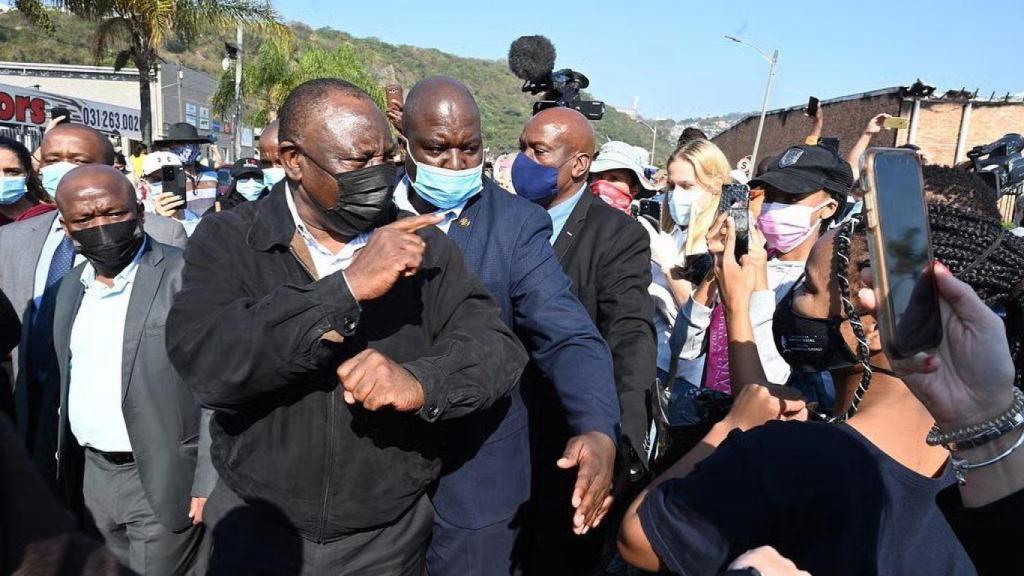
Image of the social tensions caused by the serious riots of 2021.
During that stage, the elite anti-corruption unit known as the Scorpionsand the police forces were infiltrated and weakened.
Although a national crime prevention plan was designed in 2022, according to Lamb, neither the budget nor the political will have accompanied its implementation.
“The police maintain practices inherited from apartheid, aggressive and focused on poor neighborhoods with strong racial bias”, adds the criminologist.
A story that doesn’t add up
Meanwhile, the proliferation of illegal weapons and the absence of structural reforms aggravate the situation.
The new national unity government has promised to prioritize the fight against crime, corruption and gender violence.
The Democratic Alliance, one of the executive parties, has proposed the creation of an anti-corruption commission with the capacity to prosecute serious crimes and organized crime.
In 2023 they registered 32 farm murders -of white and black victims-, which represents less than 0.1% of the total homicides in the country.
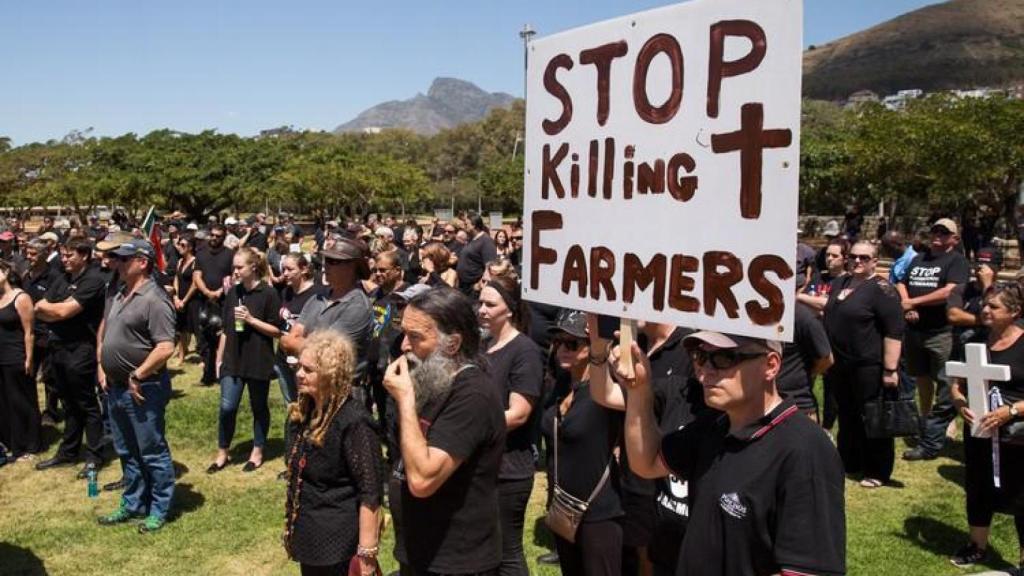
White South African farmers protesting.
Groundup.org
According to the agricultural union Transvaalthe majority of those killed in these rural areas were black workers or security guards.
However, The American far right has amplified these isolated cases to sustain a narrative of persecution against whites..
Ziyanda Stuurmana security consultant, explains that this discourse manipulates the general distrust of the State: “We feel insecure. And when someone validates that vulnerability, we seek to identify with them, even if their reasons are false,” she maintains.