
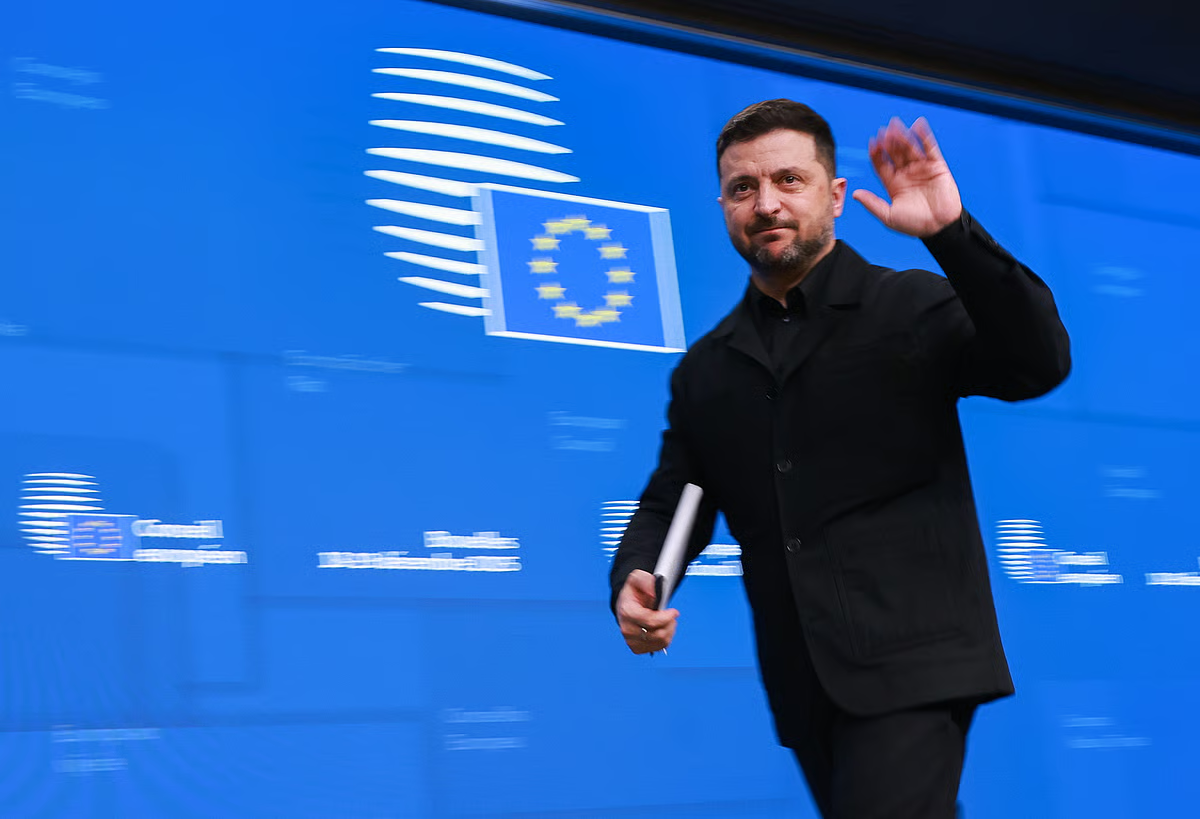

They ended up opting for the second option, based on issuing joint debt to mobilize money for Ukraine, taking advantage of the budgetary margin as a guarantee for Brussels to go to the markets.
The International Monetary Fund estimates that Ukraine’s needs for the next two years are around 137 billion euros, with the EU wanting to meet them with close to two-thirds.
Before the summit, the measure that appeared to garner the most support in the EU concerned a reparations loan to Ukraine, but was opposed by Belgium, which hosts most of the frozen Russian assets through Euroclear, a Brussels-based securities depository institution that holds €185 billion of the total €210 billion in frozen assets in Europe.
The Belgian Government demanded guarantees and clear commitments from the other Member States to protect itself legally, as it did not want to take the risk of running out of funds if Russia did not pay reparations, and remained adamant in the negotiations, leading EU leaders to opt for “plan B”.
Russia invaded Ukraine in February 2022.