
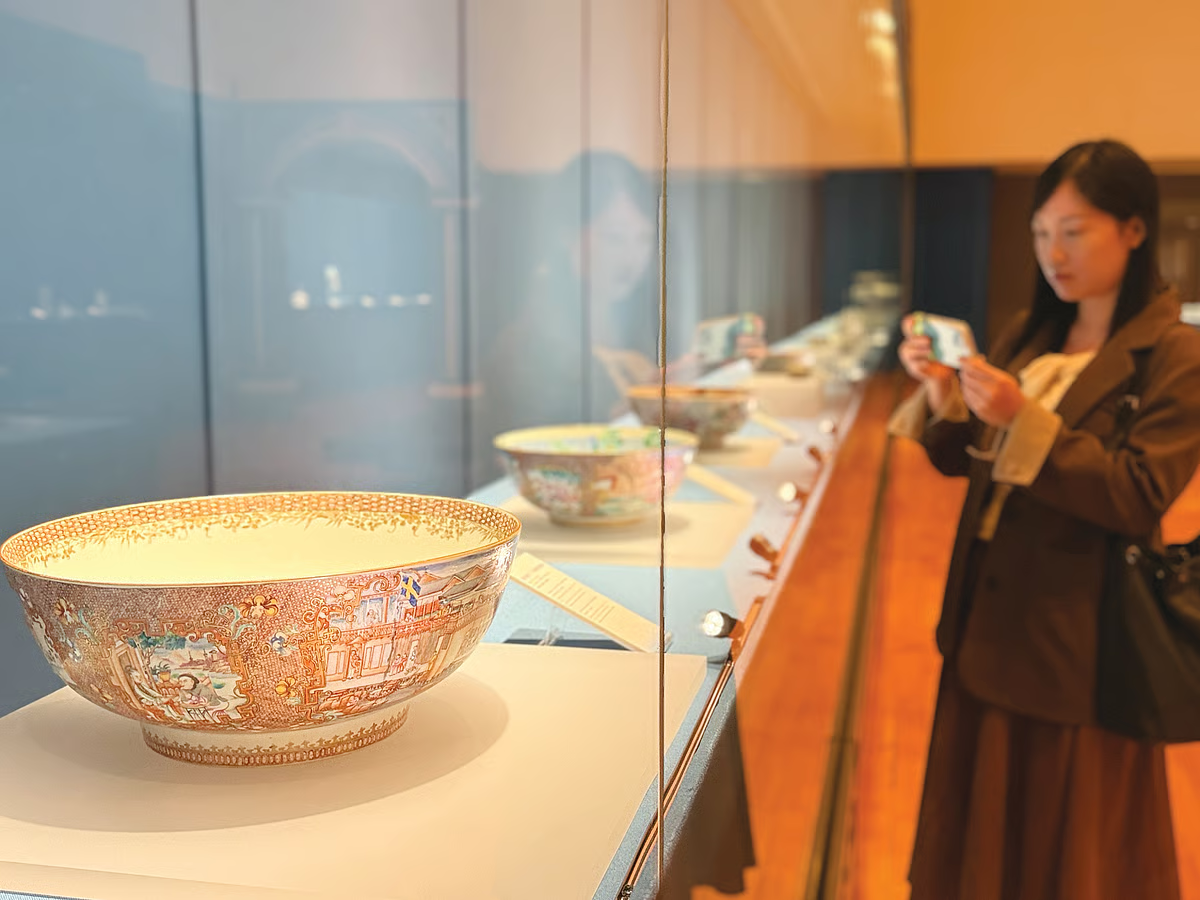

During this period, Macau played a fundamental historical role as a strategic hub between China and Europe, and especially between China and Portugal. Among the archaeological finds and preserved objects – including export porcelain, pieces from the Sino-Portuguese trade and locally produced ceramics – there are material testimonies that reflect the moments of encounter, dialogue and integration between the two cultures.
Since 1999, the Beijing Palace Museum and the Macau Museum of Art, under the supervision of the Cultural Institute of the Macau Special Administrative Region, have been developing continuous cooperation through the joint holding of cultural heritage exhibitions, a journey that has been going on for 26 years.
This year, both institutions collaborate to present the exhibition Reflections of Maritime Links, which focuses on the intense interactions between China and Portugal, revisiting Macau’s unique role as a global trade center during the Ming and Qing dynasties. The exhibition reveals the political, economic and cultural exchanges between the two countries, presenting a vivid portrait of the dialogue between the civilizations of the East and West between the 16th and 19th centuries.
Formerly known as “Haojing” (literally “water mirror”), Macau inspires the title of the exhibition – Reflections of Maritime Connections -, which symbolically refers to the opening of new navigation routes that made contact between China and Portugal possible. As a space of confluence between East and West, Macau reflects the encounters, dialogues and cultural fusions that have marked its history.
The exhibition highlights two main thematic sections: the Sino-Portuguese porcelain trade and courtly relations. As fundamental mediators in the reciprocal knowledge between both cultures, the Portuguese missionaries present at the Qing Court played a decisive role in the fields of diplomacy, astronomy and calendar, science, art and culture, promoting a relationship of continuous and multifaceted contact between the two courts.
The final section of the exhibition brings together a representative set of pieces from the Qing Court collection, which illustrate the synthesis between Western and Eastern techniques, having witnessed the arrival in China of European science, cultural ideas and aesthetic trends, which, after absorption, re-elaboration and innovation, acquired a new creative vigor. At the same time, these pieces reflect the multiple moments of encounter and exchange between civilizations along the Maritime Silk Road.
On the occasion of the centenary of the Beijing Palace Museum, this thematic exhibition held at the Macau Museum of Art assumes particular relevance as it recovers, through cultural heritage, the historical thread that connects the Sino-Portuguese ceramic trade to courtly relations between the two countries. The exhibition highlights how, thanks to the Maritime Silk Road, continuous processes of cultural exchange and mutual learning between civilizations were built, illuminating from a unique perspective the depth and longevity of the ties established between Portugal and China over several centuries.
The porcelain pieces – privileged material testimonies – reveal a timeless dialogue between East and West and the harmony found in ceramic production demonstrates the meeting and convergence of distinct artistic ideals. For centuries, Chinese porcelain displayed in Portuguese stately homes also symbolized the long-lasting commercial ties established with China.
The exhibition features 37 pieces from the National Museum of Ancient Art of Portugal, including 26 Chinese porcelains and 11 works of Portuguese faience. These artefacts reflect not only the refined aesthetic value of Chinese ceramic art, widely appreciated, but also the ingenuity of Portuguese artisans in integrating oriental decorative motifs into local production, a fact that allowed the dissemination of ceramic art in popular everyday life. This decorative fusion testifies to the lasting influence of Chinese porcelain in Portugal and even throughout Europe, where a true collecting culture developed.
With regard to the Reflections of Maritime Connections exhibition, it is important to highlight the contribution of valuable courtly pieces by the Beijing Palace Museum, the provision by Portuguese museums of collections that reflect the European perspective, and the way in which the Macau Cultural Institute integrated the specificity of the local historical context into the narrative. It was thanks to the commitment and active collaboration of all the institutions involved that this exhibition could be carefully designed to open the door to the secrets of history to the public.
Therefore, this exhibition is not limited to revisiting the History of Sino-Portuguese cultural relations, it also invites the contemporary public to reflect on globalization, the dialogue between civilizations and the contemporary meaning of cultural sharing.
The exhibition will be on display until March 8th of next year.