
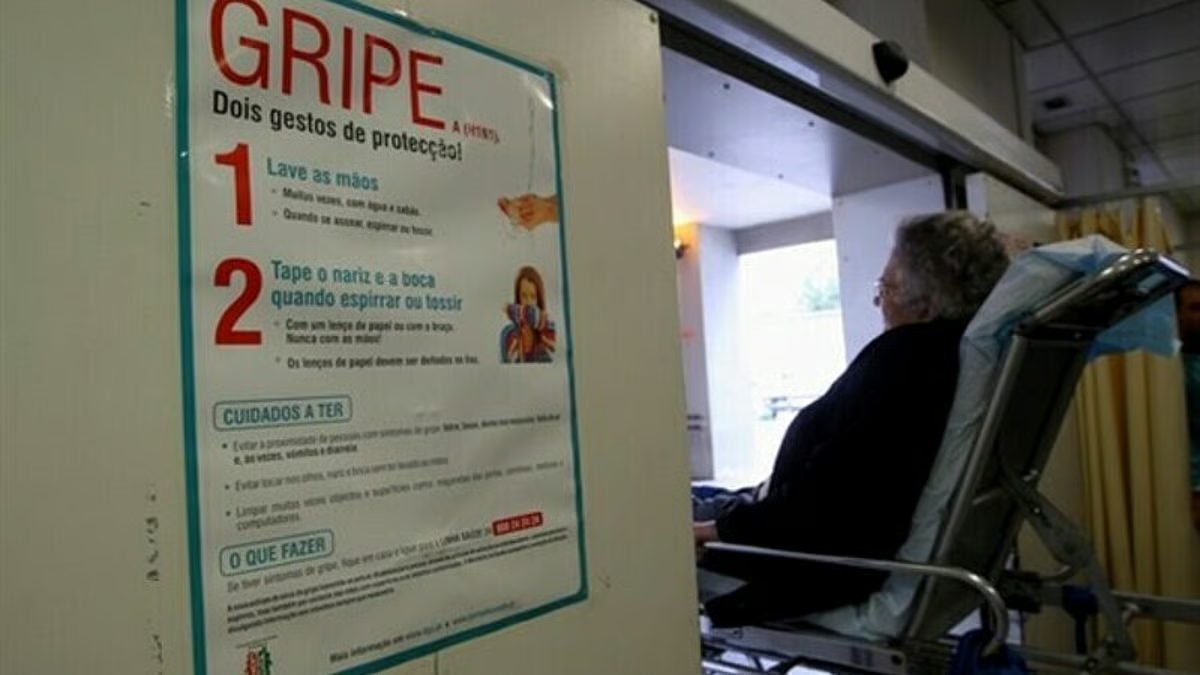

Portugal is registering a significant increase in serious cases of flu, with a direct impact on Intensive Care Units (ICU), according to the most recent data from the Influenza Epidemiological Surveillance Bulletinreferring to week 50 of 2025 (December 8th to 14th). The bulletin shows that, despite temperatures above normal for the season, influenza A is having a relevant impact on the health system.
According to a weekly update from the National Institute of Health Doutor Ricardo Jorge14.3% of ICU admissions that week were caused by influenza A, a figure that represents a significant increase compared to the previous week, when the proportion was just 4%. This is the highest value recorded since the beginning of this 2025/2026 flu season and one of the highest in the last decade, only surpassed by one of the weeks of the 2023/24 flu season.
In this last week under review, 16 new hospitalizations for influenza were reported in the ICU, mainly in older patients: almost half (seven) were 65 or over, followed by the age group from 55 to 64 years old, with five. The majority (13) had an underlying chronic disease, which confirms that risk groups continue to be those most affected by severe forms of the infection.
Another mentioned in the bulletin is the low vaccination coverage among patients admitted to intensive care. Although almost everyone had an indication for vaccination against seasonal flu (14), only a minority (three) had been vaccinated.
Since the beginning of the flu season, 46 cases of flu have been recorded, requiring admission to intensive care (ICU) in Portuguese hospitals, with an increasing trend since mid-November. All identified cases correspond to the Influenza A virus, clearly dominant at this time.
Since the beginning of the flu surveillance season, in week 40/2025 (September 29th to October 5th), the laboratories of the Portuguese Network of Laboratories for the Diagnosis of Influenza and Other Respiratory Viruses (hospitals) have reported 38,469 cases of respiratory infection and 5,587 cases of influenza.
Last week, 1,269 positive cases of the flu virus were identified, of which 1,267 were type A and 2 were type B.
“The circulation of the influenza virus continues to increase, with most countries reporting widespread influenza activity of low to medium intensity”, says INSA, indicating influenza A is dominant in all countries, with A(H3N2) driving the upward trend in recent weeks.
According to INSA, circulation is greater in children aged 5 to 14, with an increase in hospitalizations in some countries, affecting all age groups, but mainly adults aged 65 or over.
Flu activity increased three to four weeks earlier than in the previous two seasons.
Excessive mortality in December
This week, mortality from all causes registered higher than expected values in Portugal, with excess mortality having been identified in the North, Center and Algarve regions, in both sexes and in people over 75 years of age.
In fact, according to the mortality surveillance portal Sico, Portugal has already recorded more than 540 excess deaths in the month of December – 230 of which in the last seven days -, having recently gone through a period of nine consecutive days with excess mortality, between the 6th and 15th of December.
Other respiratory viruses
Since the beginning of this season, other respiratory agents have also been identified in 2,972 cases, and in the week analyzed in the published bulletin, 276 cases were identified, with Respiratory Syncytial Virus (RSV) and Rhinovirus/Enterovirus being the most frequently detected.
According to INSA, low levels of RSV activity were recorded in relation to hospitalizations in children under 24 months in the week under analysis.
Analyzing the international situation, INSA reports that the number of patients seeking primary healthcare with symptoms of acute respiratory illness was high in approximately half of the countries that reported data, indicating that there is currently a significant circulation of respiratory viruses in the European Union and the European Economic Area (EU/EEA).
With Lusa