

============2024 – OPINION – Body Text CAP_0030 (5258557)============
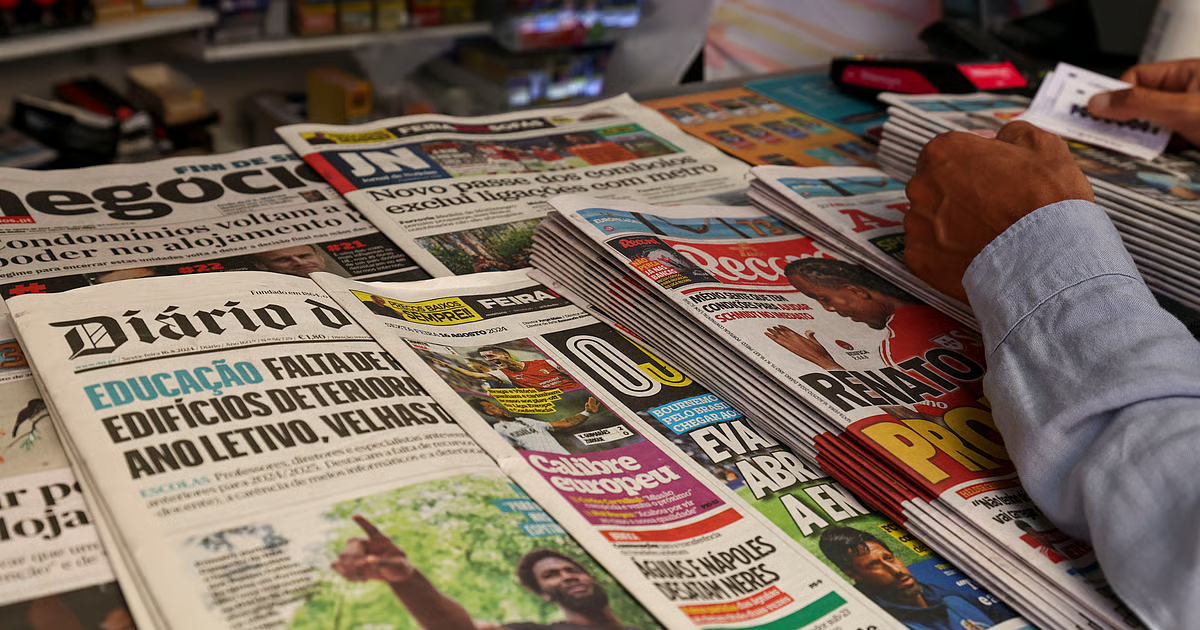
The growing degradation of the printing industry and the progressive suffocation of distribution chains are two factors that place Portugal at serious risk of, very soon, being left without access to the written press in vast areas of its territory.
For many of our publications, the main way of ensuring regular contact with the public is, today, printing in Spanish companies. This with all the inherent difficulties and constraints, in addition to the damage to the national economy.
Additionally, the crisis announced by VASP, the only distribution operator in Portugal, now confronts us with the emerging danger of eight districts on the mainland being left without newspapers or magazines from the beginning of next year.
We, directors of all daily general information newspapers, all weeklies, the only daily printed publication in the area of economics, newsmagazines and general and thematic information magazines, and all sports dailies that are currently printed, distributed and sold in our country, cannot watch this situation in silence.
It is our obligation and our ethical and moral imperative to issue a very serious alert to this situation to the entire civil society, and to all those responsible for politics, whether at the level of the central State or in local authorities.
Failing to have newspapers and magazines in significant areas of the country will cut off the access of a relevant part of the population to news professionally validated by our newsrooms.
It will also inevitably cause the erosion of sharing across the country of the major current flows, the main news and collective interests, in short, the biggest concerns and common causes.
For many Portuguese people of all ages, reading the newspaper, whether it be the daily newspaper or the weekly newspaper, whether it be a sports newspaper or a magazine, is the only time they come into contact with the written Portuguese language.
Additionally, the end of the written press would further increase the danger of misinformation and fake news that spreads on social media.
Finally, it is up to us to alert to the danger that this breakdown represents for the media, an economic activity that employs thousands of people in Portugal, qualified professionals who contribute to the collective national wealth, as well as to the health and vitality of democracy.
Journalists, technicians, photojournalists, printers, producers, and many other professionals will have their jobs at risk, as an inevitable consequence of this break in the distribution chain. The same reasoning applies to all complementary activities referred to in this text.
The reader believes that, for all of us, directors, it would be much more comfortable to limit ourselves to creating daily, as we always do, the best possible newspaper or magazine with you in mind.
However, we are faced with a historic moment that demands our presence and our alarm signal.
In defense of journalism, but above all democracy and freedom, we cannot be silent accomplices to a risk that can and should be avoided. It is time to join forces and ensure that the written press continues to reach all Portuguese people, throughout the territory, as the mainstay of a healthy, informed and vibrant democracy.
Filipe Alves – Director “Diário de Notícias”
Rafael Barbosa – Director “Jornal de Notícias”
Inês Cardoso – Editorial General Director “Notícias Ilimitadas”
Pedro Ivo Carvalho – Director “Around the World”
Luís Pedro Ferreira – Director “A Bola”
Rui Tavares Guedes – Director “Visão”
João Vieira Pereira – Director “Expresso”
David Pontes – “Público” Director
Mário Ramires – Director “Nascer do SOL”
Diana Ramos – “Business” Director
Bernardo Ribeiro Director “Record”
Carlos Rodrigues – Director “Correio da Manhã”, “Sábado” and “Sábado Viajante”
Nuno Vieira – Director “The Game”