
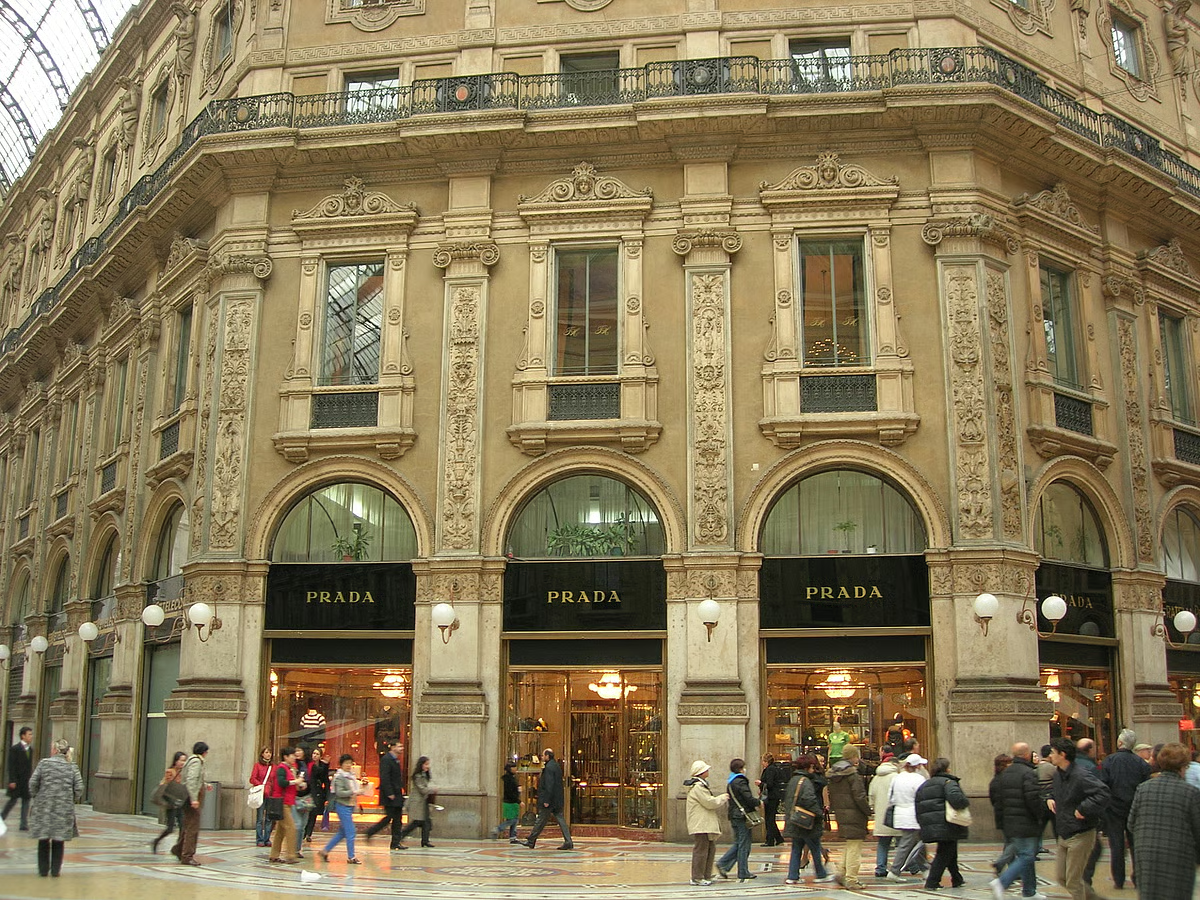

The Prada Group confirmed the acquisition of the fashion house Versace for 1.3 billion euros, in an operation that unites two references in Italian luxury under the same management.
The deal was concluded this Tuesday, December 2, after obtaining the necessary regulatory authorizations, the group said in a succinct statement.
Lorenzo Bertelli, heir to the Prada family and current marketing director and responsible for the group’s sustainability, assumes the executive presidency of Versace. Bertelli guarantees that he does not foresee immediate operational changes, but highlighted the brand’s growth potential, which has been below expectations in recent years. Prada considers that Versace, with 47 years of history, still holds “significant untapped potential”.
The European Commission had already authorized the operation, on September 30 of this year. The community executive concluded, at the time, that the transaction did not raise competition problems, taking into account the limited market positions of the companies involved. In this way, it gave the green light to the integration of Versace into the Prada group without imposing corrective measures.
The acquisition comes after a period of discreet performance by Versace as a subsidiary of the North American group Capri Holdings, which in 2018 had paid 1.8 billion euros for the brand. In 2024, Versace represented around 20% of Capri’s revenue (5.2 billion euros).
According to Prada’s presentation regarding the business, Versace will represent approximately 13% of the conglomerate’s pro-forma revenues, compared to 64% for Prada and 22% for Miu Miu.
The agreement complements a collaboration that began in 2024 and coincides with a creative phase of Versace’s relaunch, now under the direction of designer Dario Vitale, whose first collection was shown in Milan in September. Prada executives indicated that the change in creative team was not linked to the acquisition.
A central part of Prada’s strategy is the integration of production: the company is already preparing the inclusion of Versace in its manufacturing units in Italy, arguing that the same artisanal expertise allows it to produce for different brands with similar quality standards.
This year, the group invested 60 million euros in the supply chain and, between 2019 and 2024, invested around 200 million.
Prada also operates a training academy that, over the past few decades, has trained hundreds of artisans — 70% of last year’s 120 graduates were subsequently hired by the group.