

Text: Helenara Braga Avancini*
I am a lawyer, woman, immigrant and mother. From these four dimensions that intersect, reinforce each other and shape my way of seeing the country, I witness daily something that rarely comes into public debate clearly: the profound crisis of administrative institutions in Portugal. This is not a sectoral, episodic problem or the result of “migratory pressure”. This is a structural collapse that affects citizens, professionals and public servants, and which the State seems incapable of recognizing or confronting.
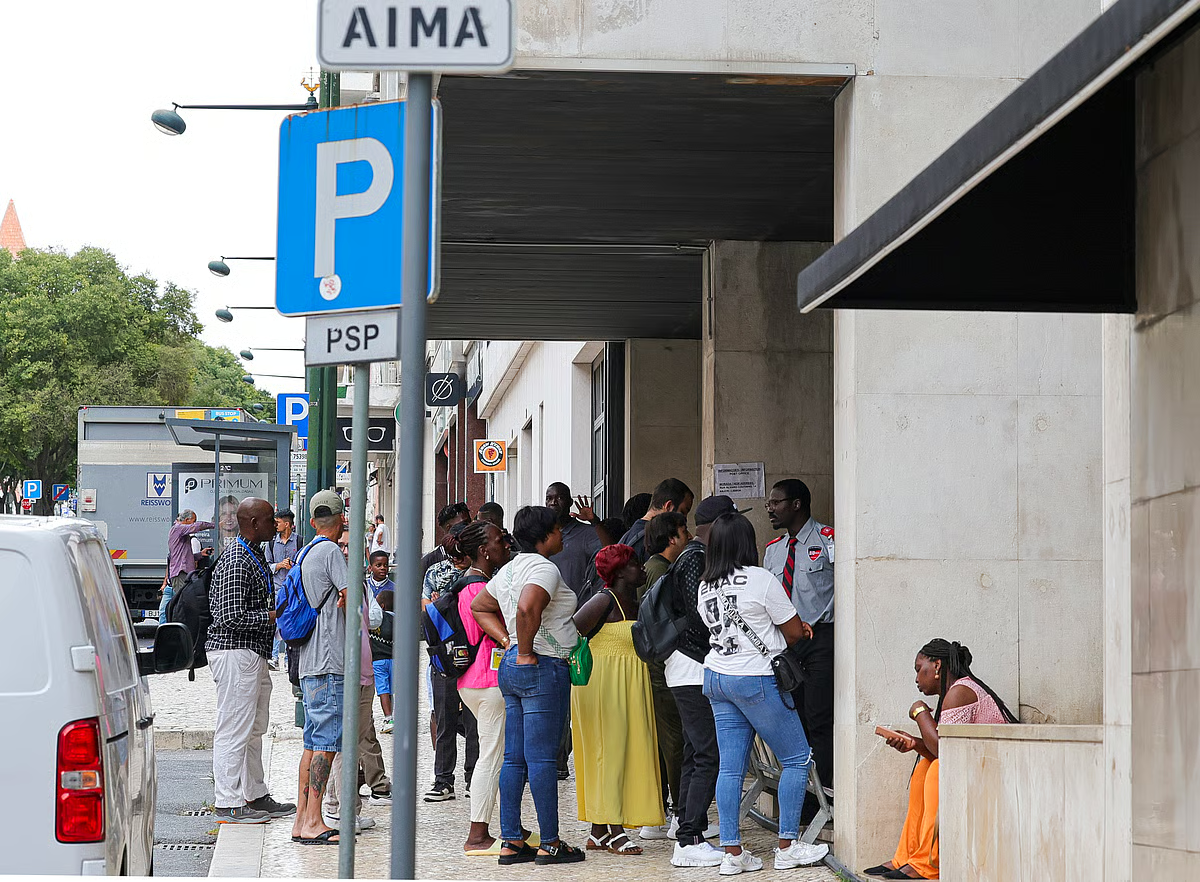
Anyone who follows the news has already heard the promises: new portals, digitalization, modernization of service, ease of scheduling. The reality is different. At AIMA, Finance, Registries, IMT and Social Security, services remain mired in delays, with unpredictable deadlines, without face-to-face service, without responses to emails, with phones that no one answers and calendars that never open. In the real country, people’s lives depend on services that have stopped working.
Recently, I accompanied a couple in an AIMA service. The employee started crying right away and remained that way for almost two hours. The explanation was short and devastating: “It’s the pressure.” In another situation, when sending files to a registry office in the interior, I received a call from an officer who announced, bluntly, that he “would not do the work”, because he was the only employee available. Days later, a formal letter arrived stating that it would be “humanly impossible” to carry out the service. Humanly impossible: this expression has sadly become the most faithful portrait of Portuguese public administration.
Citizens know this reality. Immigrants too. And professionals, such as lawyers, solicitors, accountants, try to navigate a system that, often, simply does not respond. The consequence is predictable: those who need help turn to the courts, and the courts, equally overwhelmed, take months to issue a simple notification. The administrative crisis fuels the judicial crisis, which reinforces the feeling of widespread paralysis.
Click here and follow the DN Brasil channel on WhatsApp!
It is clear that the State has the right and duty to develop serious migration policies. This is how it is in any mature democracy. What you cannot do is turn migration policy into a smokescreen to hide internal flaws. In recent years, it has become comfortable to point to pressure from immigrants as the cause of delays, justify restrictive reforms as “necessary” and insinuate that the system cannot cope because too many people arrive. This narrative, in addition to being unfair, is false. What cannot handle it is an undersized, poorly paid, aging administrative apparatus that has long been abandoned by successive political options.
It is also important to highlight what is rarely debated: the State collects millions in fees, taxes and administrative services. Millions. However, this recipe does not translate into reinforced teams, decent wages, adequate training, humane working conditions or real modernization. There is no consistency between what the State charges and the service it delivers. It’s not about a lack of money, it’s about a lack of clear priorities.
The crisis of institutions is the direct result of political and administrative decisions: freezing of careers, lack of competitions, continued disinvestment, technical reforms that promise a lot and deliver little, and an excessive dependence on portals that try to replace people with fragile systems that often fail. The public machine does not need more platforms, it needs more people. And better conditions for the people who are already there.
The truth is simple and uncomfortable: everyone suffers. Public servants, overworked and without resources; citizens, who cannot resolve basic issues; immigrants, pushed from booth to booth; professionals, prevented from fully carrying out their work; and even the Judiciary, which finds itself transformed into the final instance for those who have not found an answer anywhere else.
Portugal needs to recognize that it is experiencing an administrative crisis, not a migratory crisis. And you need to accept that restricting rights does not improve services; it just diverts attention. The State must take responsibility for the system it created, for the choices it made and for allowing the problem to reach this point. The path is different: human investment, structural reorganization, transparency in response times, valuing employees and political courage to face what is in plain sight.
No society develops by blaming those who arrive or sweeping problems under the rug. Development requires vision, responsibility and functioning institutions. Portugal deserves this. And all of us, lawyers, citizens, immigrants, employees, deserve to be treated not as obstacles, but as an essential part of the community that the state exists to serve.
*Helenara Braga Avancini is a lawyer, has been in Portugal since 2013 and works especially in Foreigners and Immigration Law.