
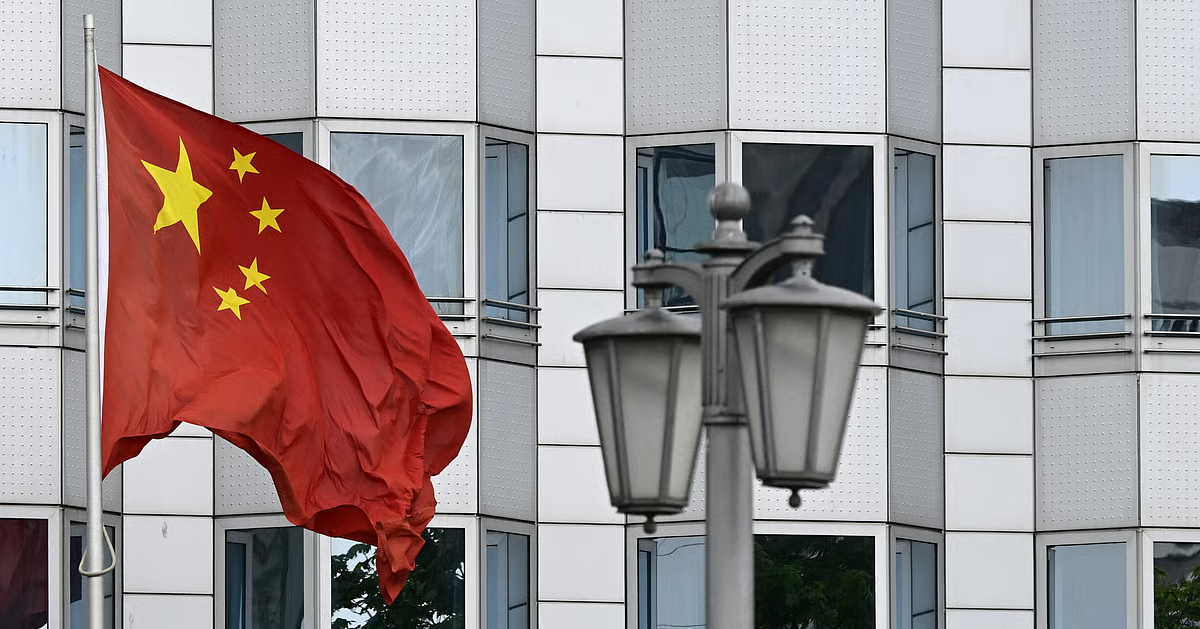

Beijing reduced its North American public debt portfolio in October to the lowest level since 2008, reflecting concerns about the sustainability of North American debt and the independence of the Federal Reserve, the South China Morning Post reported this Friday, 19th.
According to data from the United States Treasury Department cited by the Hong Kong newspaper, the value fell from 700.5 billion dollars (597 billion euros) in September to 688.7 billion dollars (587 billion euros) in October, the lowest record since November 2008.
This value represents a 47% drop from the peak in November 2013, when Beijing held around 1.32 trillion dollars (1.12 trillion euros) in US Treasury bonds, according to Chinese financial data company Wind.
The progressive withdrawal of funds began in Donald Trump’s first term (2017–2021), and in March of this year, China fell to third place among the largest foreign holders of US debt, behind Japan and the United Kingdom. Two months later, the portfolio fell to its lowest since 2009.
This week, Yu Yongding, a former adviser to the People’s Bank of China, warned in an article of the growing risks associated with dollar-denominated assets, calling for a reduction in dependence on external markets, “especially the US”, and the minimization of what he described as “the dollar trap”.
According to the economist, China could be “the decisive force” to put an end to the two pillars of the US balance of payments: the global dominance of the dollar – supported by military power – and dynamic financial markets driven by technological innovation.
Alongside the sale of debt, Beijing has reinforced the diversification of its external reserves: in November, it purchased gold for the thirteenth consecutive month, accumulating a total of 310,600 million dollars (264 billion euros) in reserves of the precious metal, considered a safe haven asset in periods of instability.
Despite the year-long trade truce signed in October between Washington and Beijing, the two powers have accumulated months of tension since Trump’s return to the White House, fueling speculation about a possible massive sale of North American debt by China.