
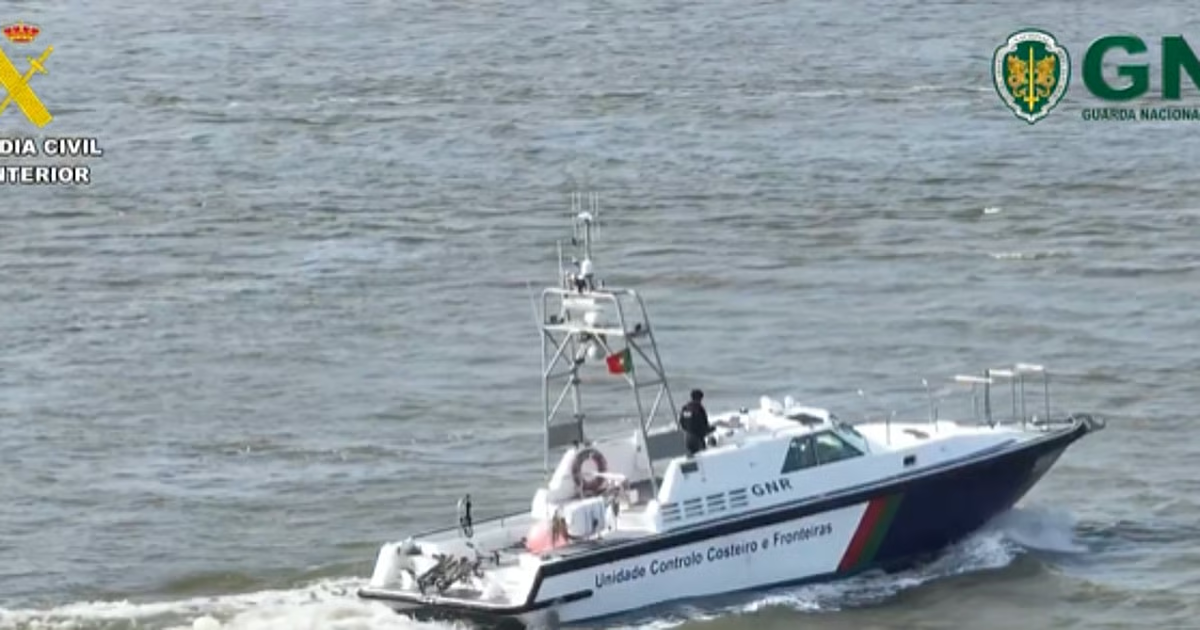

According to the two police forces, this is “the first coordinated device to combat cross-border crime” and will continue over time through the planning of new operations on both sides of the border with “the objective of maintaining pressure on organized crime, consolidating cooperation between the two countries” and reinforcing public security.
In an assessment of the operation, called ‘Diana’, the GNR and the Guardia Civil say they were 15 people were arrested and 1,509 kilos of hashish were seized, 36 boats, nine of which were high speed, 1,472 bottles of fuel, 13 vehicles and a firearm, in addition to the preparation of 98 infraction notices.
These two security forces indicate that actions were carried out in different parts of the province of Huelva, as well as in Portuguese border areas.
“The GNR and the Guardia Civil of Spain coordinated a device against cross-border crime, especially with regard to drug trafficking and logistical support that share the same context in the border areas between the south of Portugal and the province of Huelva”, states the statement.
The two security forces emphasize that operation ‘Diana’, which will be “maintained active”, responds to the increase in coordinated actions with the neighboring country.
According to the GNR and the Guardia Civil, this device was created “due to police pressure exerted in the Gibraltar area, which forced criminal organizations dedicated to drug trafficking to modify their ‘modus operandi’ and the drug unloading locations, moving to the border between the two countries, which coincides with the bed of the Guadiana river”.
According to the police of both countries, the border position of this river, as well as the multiple channels that leave it, were considered “by criminal organizations as an opportunity to carry out discharges, using semi-rigid vessels of great power and cylinder capacity, thus trying to escape control in Campo de Gibraltar”.
“The GNR and the Guardia Civil have committed to strengthening and facilitating continuous coordination to combat this threat, through a police device in cross-border regions by land, sea and air, thus guaranteeing public security, surveillance and control of road safety, while also allowing an exchange of information between both police bodies”, they indicate.
During three weeks of November, the GNR and Guardia Civil military intensified surveillance and reinforced their presence, particularly in the Portuguese areas of the Algarve and in several municipalities in the province of Huelva.
In the operation, which ended on November 25th, but was only announced today, more than 200 checkpoints were carried out on different communication routes, more than 400 vehicles were controlled and more than 900 people were identified.
The two police forces emphasize that “the increase in police presence and coordination between forces has made it possible to significantly halt the illicit activity of these organizations in cross-border areas, both with regard to drug trafficking and associated logistical activities, such as changing crews or supplying supplies and material”.
On the Portuguese side, the GNR participated in the operation, through the Coastal and Border Control Unit (UCCF), territorial commands of Faro and Beja and the Criminal Investigation Section of the Special Operations Intervention Group (GIOE), and the Portuguese Air Force.
On the Spanish side, controls and surveillance were carried out on the ground – with agents from Seguridad Ciudadana, COS, GAR, ARS, USECIC, Policía Judicial, EDOA and CRAIN; by sea – with the Provincial Maritime Service of Huelva and the Grupo Marítimo del Estrecho (and Coastal and Border Control Unit); and by air – with the PEGASO, SAER and Servicio Aéreo teams.