

The World Health Organization (WHO) warned, this Monday, 1, that cuts in international funding are compromising the prevention and treatment of HIV, meaning that the response to the virus is at a crossroads, after decades of progress.
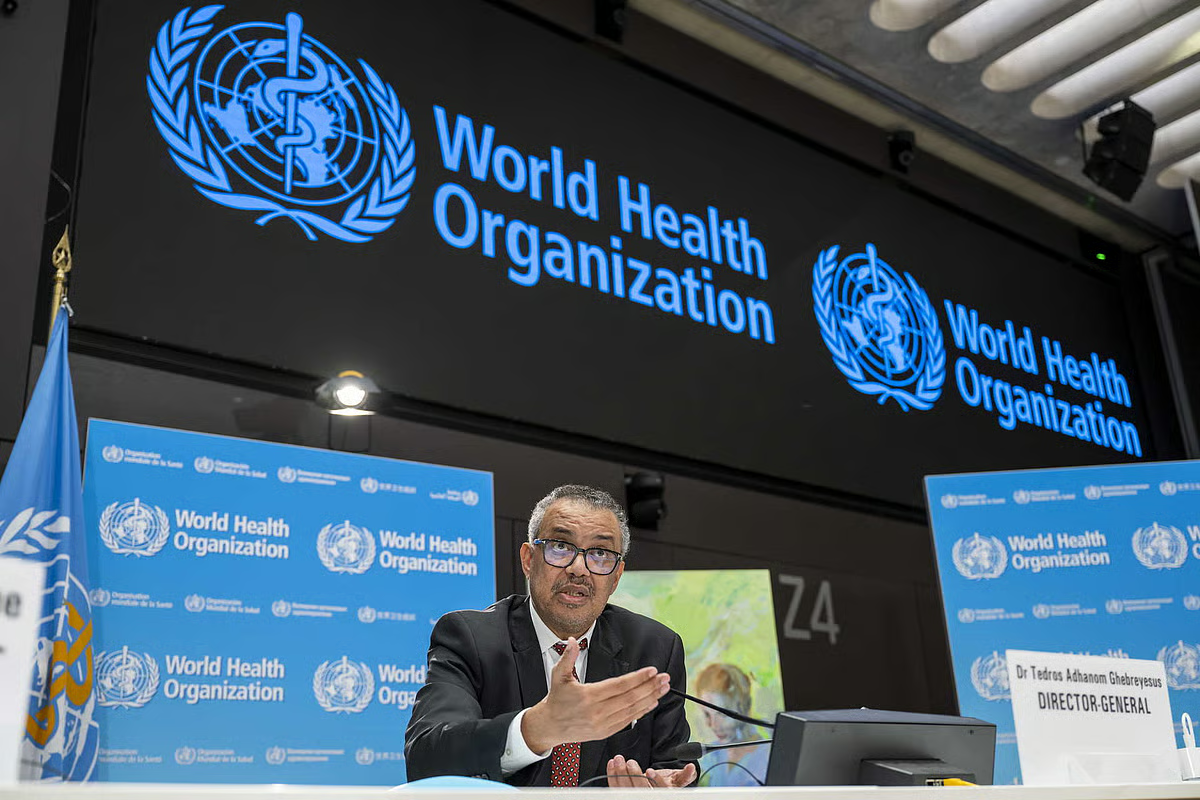
“We face significant challenges, with cuts in international funding and the stagnation of prevention”, highlighted the director-general of the United Nations, Tedros Ghebreyesus, in a statement to mark World AIDS Day.
According to the WHO, “drastic and sudden” reductions in funding from international donors this year have led to essential programs such as pre-exposure prophylaxis (PrEP) and harm reduction for people who inject drugs being scaled back or closed altogether in some countries.
“After decades of progress, the response to HIV [vírus da imunodeficiência humana que ataca o sistema imunitário e causa a Sida] is at a crossroads”, with prevention efforts expected to stagnate in 2024, with 1.3 million new infections, “disproportionately impacting key and vulnerable populations”, warned the Geneva-based organization.
Globally, the WHO estimates that 40.8 million people were living with HIV and 630,000 people died from causes related to the infection.
While the full extent of the impact of the cuts in foreign aid is still being assessed, the organization believes that access to PrEP has “dramatically declined.”
He added that, an estimate from October this year, indicates that 2.5 million people who used PrEP in 2024 will have lost access to their medicines due exclusively to cuts in donor funding.
“These disruptions could have far-reaching consequences for the global response to HIV, compromising efforts to end AIDS by 2030,” warned the WHO.
In the statement released this Monday, the WHO also called on governments and partners to quickly expand access to new approved therapies, such as lenacapavir (LEN), with the aim of reducing infections and combating the disruption to essential health services caused by cuts in foreign aid.
According to him, LEN, recently approved, constitutes a highly effective and long-lasting prevention alternative to oral tablets and other therapeutic options.
In Portugal, according to a recently released study by the Directorate-General for Health (DGS), 997 cases of HIV infection were registered last year, fewer than in 2023, but more than half (53.9%) of diagnoses occurred late, especially in people aged 50 or over.