
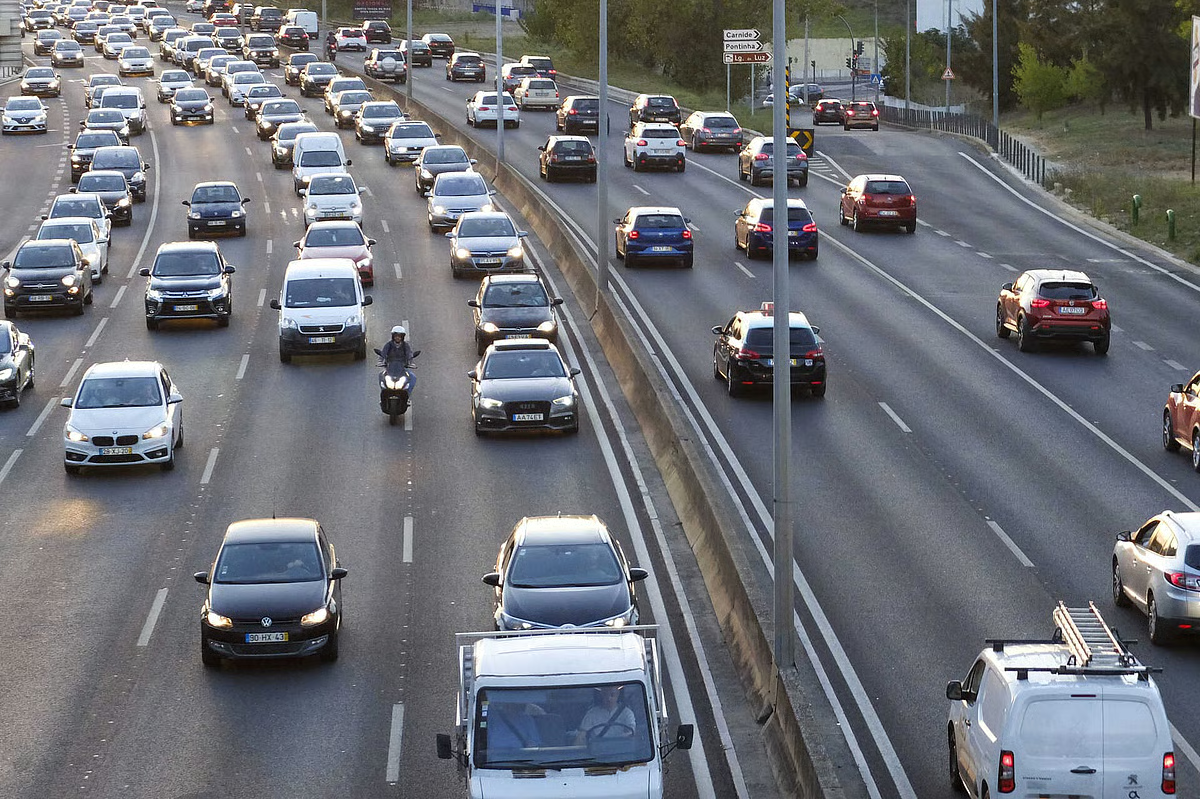

This Tuesday, December 16, the European Commission abandoned the target of having only electric or hydrogen cars by 2035, now setting it at 90%, responding to the sector’s concerns.
Thus, from 2035 onwards, it is mandatory to reduce polluting gas emissions by 90%, with the remaining 10% being compensated through the use of low-carbon steel produced in the European Union (EU), the use of synthetic fuels (‘e-fuels’) and biofuels.
This compensation, considers the community executive, allows vehicles that are not fully electric or powered by hydrogen to continue to be sold after 2035, as long as manufacturers compensate emissions in this way.
The Automotive Package also responds to calls from EU industry to simplify rules and offer industry more flexibility to meet carbon dioxide (CO2) targets and supports vehicles and batteries manufactured in the EU.
With this review of targets, Brussels considers that the EU’s competitiveness increases, while saving costs estimated at 706 million euros per year and reducing bureaucracy.
This will allow plug-in hybrids (PHEV), range extenders, mild hybrids and internal combustion engine vehicles to continue on the road after 2035, in addition to fully electric vehicles (EV) and hydrogen vehicles.
By 2035, car manufacturers will be able to benefit from ‘super credits’ for affordable small electric vehicles manufactured in the EU, a move designed to encourage the commercialization of more small electric vehicle models.
In the 2030 target for cars and vans, additional flexibility is introduced that allows ‘deposits and loans’ for 2030-2032.
Additional flexibility is also granted to vans, with a reduction in the CO2 target from 50% to 40% in 2030.
For heavy-duty vehicles, the Commission also proposes a specific change to CO2 emission standards, with flexibility that facilitates compliance with the target of reducing pollutant emissions from exhausts of 45% in 2030.
Brussels also wants to accelerate the development of a battery value chain entirely manufactured in the EU, the ‘Battery Booster’, which provides a budget of 1.5 billion euros to support European battery cell producers through interest-free loans.
In addition, an investment of 1.8 billion euros is planned to accelerate the development of a battery value chain entirely manufactured in the EU.
The European Commission guarantees to maintain the objective of climate neutrality until 2050 at the latest and is committed to ensuring that all policies continue to be consistent with this level of ambition.
In 2023, CO2 emissions from road transport represented around 30% of the EU total.