
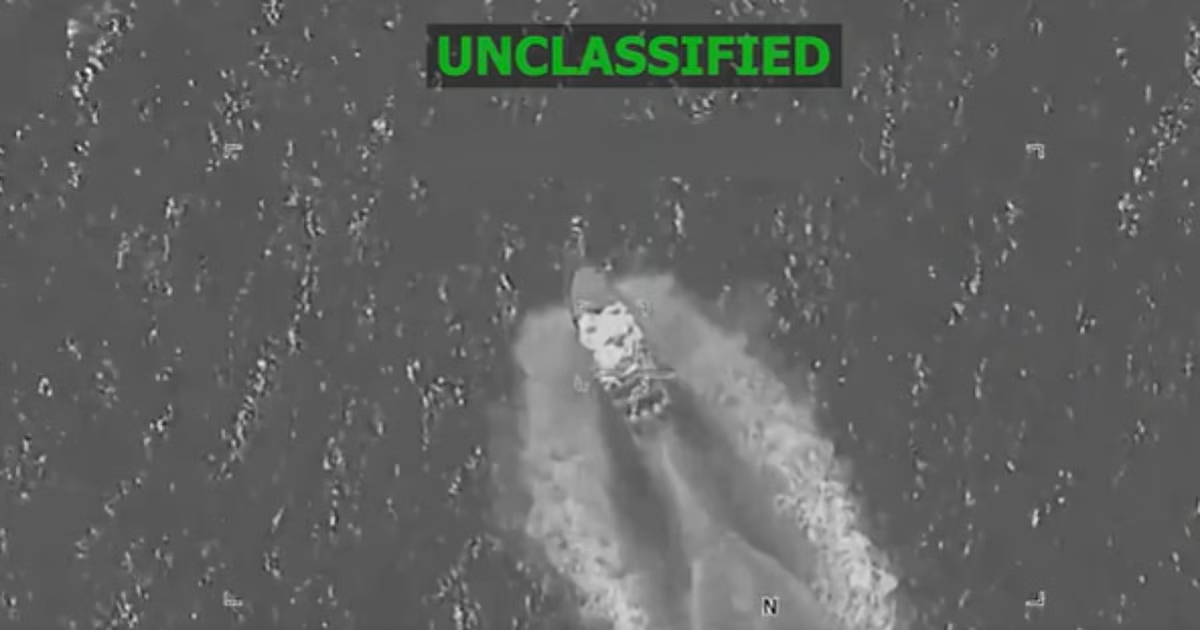

Since the beginning of September, the United States has carried out attacks against at least 26 ships, which it accuses of operating in drug trafficking in the Caribbean or the eastern Pacific, executing at least 95 people, without providing evidence that these vessels were involved in criminal activities, which has led experts and the United Nations to question the legality of the operations.
The United States has also reinforced its military presence in the Caribbean Sea since August, under the argument of the fight against drug trafficking, sending the largest aircraft carrier in the world to the region in October, the USS Gerald R. Ford, with around 5,000 soldiers on board and 75 combat aircraft, including F-18 fighters, with an escort of five destroyers.
By the end of October, the number of US troops in the southern Caribbean and at the US military base in Puerto Rico reached 10,000, half of whom were aboard eight ships.
The United States Secretary of War – the Trump Administration’s new designation for the head of the former Department of Defense -, Pete Hegseth, compared on social media the attacks against the cartels to the United States’ wars in the Middle East and Afghanistan over the last 24 years.
The White House accuses Venezuelan President Nicolás Maduro of leading a vast drug trafficking network, which the targeted head of state categorically denies, stating that Washington seeks to overthrow him to seize the country’s oil.
The legality of US attacks in foreign or international waters against suspects who were not intercepted, interrogated and brought to justice has been censured, first and foremost by the human rights organization Human Rights Watch (HRW), which called on US partners to condemn “illegal” attacks against vessels belonging to alleged drug traffickers.
“According to international law, the intentional use of lethal force is only permitted as a last resort against an individual who poses an imminent threat to life”, highlighted, on the other hand, in October the United Nations High Commissioner for Human Rights.
In mid-November, the heads of G7 diplomacy, meeting in Canada, questioned the United States about the legality of the attacks.
“We observe with concern the military operations in the Caribbean region, because they ignore international law and because France is present in this region through its overseas territories, where more than a million of our compatriots reside”, said French Foreign Minister Jean-Noël Barrot at the time, on the sidelines of the session held near Niagara Falls.
These statements were, on the other hand, produced one day after CNN reported that the United Kingdom had suspended information sharing with the United States in the Caribbean, due to concerns that it could be held criminally responsible if it were implicated in the attacks. The US Secretary of State, Marco Rubio, denied this news.