
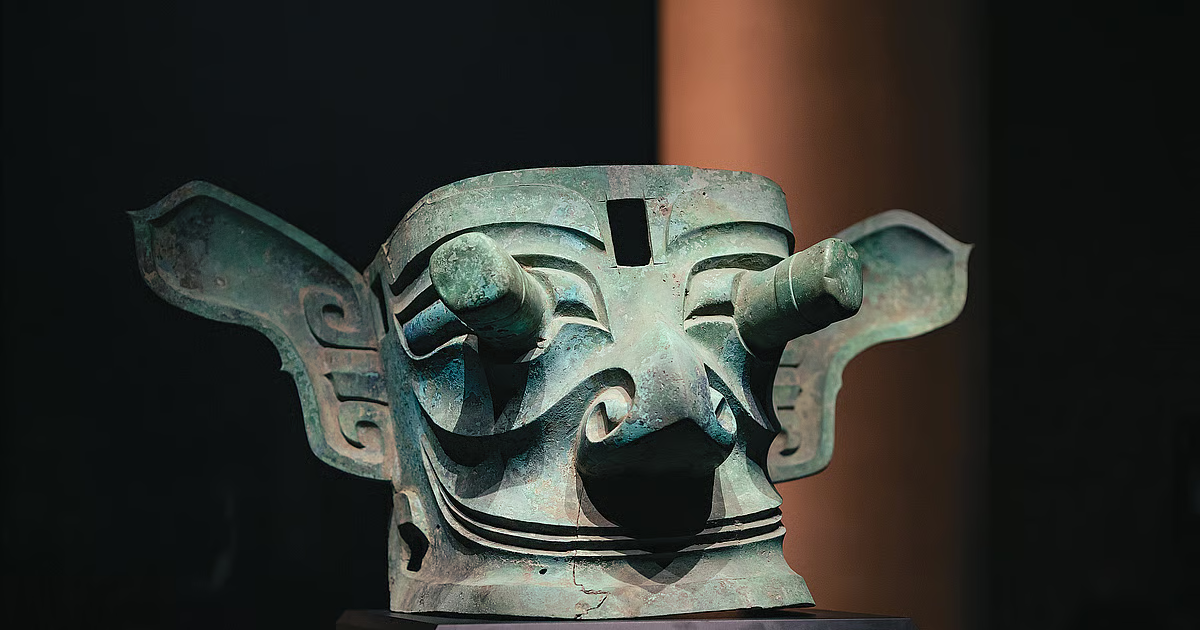

Measuring 2.62 meters high, another notable find is the bronze statue of a standing man holding an empty space in front of his chest with both hands. Some archaeologists believe he wielded a scepter or an ivory tusk, while others interpret the gesture as part of a ritual. Another standout piece is a 1.42 meter gold scepter, covered with high purity gold leaf (95%) and engraved with figures of fish, birds and human faces. It is a symbol of the political and spiritual power of ancient Shu.
According to the most recent results of carbon-14 dating, the finds from the eight sacrificial pits at Sanxingdui date back to between 1200 and 1000 BC, corresponding to the end of the Shang Dynasty. At that time, Sanxingdui already had a complex urban structure with distinct areas for the palace, artisanal production and religious ceremonies. The walls reached 40 meters wide, testifying to the existence of an autonomous political power, parallel to that of the Shang and Zhou dynasties. Archaeological evidence shows that the inhabitants mastered advanced rice cultivation techniques, supporting a dense population and creating the material conditions for a prosperous civilization to flourish.
While the Kingdom of Shu developed in the upper Yangtze basin, the Shang Dynasty flourished in the Yellow River plains of central China, with a centralized administration, a tradition of ritual bronzes, and the use of oracular writing. This culture is considered the cradle of Chinese civilization. In comparison, the culture of Sanxingdui, located in the extreme southwest, presents very distinct aesthetic and religious traits and, to this day, no traces of writing have been discovered. Still, the similarities between the Sanxingdui bronzes and Shang ritual artifacts suggest intense interactions between both regions.