
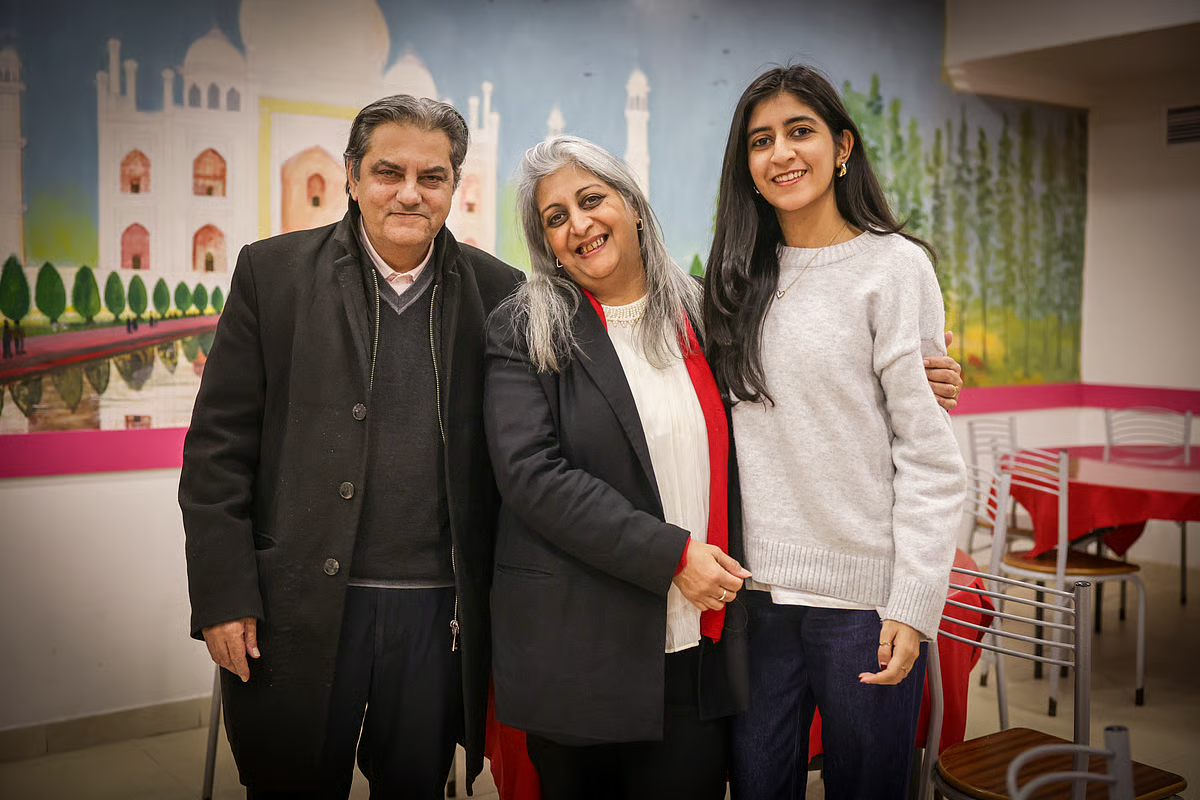

Inside the Radha Krishna temple, in Lisbon, the nerve center of the Hindu Community of Portugal, Christmas presents itself less as a contrast and more as an embrace between cultures. At the entrance to the vegetarian canteen, right below the temple, in harmony with a screen that simultaneously represents Ganesh and the mantra AboutChristmas decorations appear, with a pine tree full of lights, balls and colorful ribbons. In the canteen, on the table, traditional Indian sweets and savory dishes, shared in a long, calm and revealing conversation with the Amratlal Ranchordas family, which appears as a portrait of how Christmas is cherished by many Portuguese Hindus.
Sona Manilal, the mother, explains this meeting of traditions, while sharing some pieces of fafda gathiyaa handmade chickpea flour savory: “In India, it is eaten for breakfast, accompanied by jalebi“, a wheat flour sweet, fried and dipped in sugar syrup, which is a mandatory presence at parties and community events. Next to it, there is the kayu boilersmade from cashew nuts, and the pendaprepared from milk boiled until it takes on a toasted tone.
It will always be a “full table”, guarantees Sona, anticipating what will happen in a few days, on Christmas Eve. Food, as so often happens, is the starting point to talk about identity, belonging and celebration.
Dipac Amratlal, the father, was born in Lourenço Marques, now Maputo, in Mozambique, and arrived in Portugal in 1976, aged 14. Sona had a similar path, being the granddaughter of an Indian immigrant who settled in Africa, also in Lourenço Marques. However, They met in Porto, after decolonization, and made Portugal their permanent home.
The daughters, Niráli and Ainoa, were born in Portugal. “We are Portuguese, but Hindu”, summarizes Ainoa, the youngest, who, at 22 years old, enthusiastically explains that she is “working at a communications agency, Taylor, part of the Young Network group. And I’m doing a postgraduate degree in Professional Football Communication with Liga Portugal“, he adds.
As for Christmas, despite not being a celebration of Hinduism, it was always present in the family home. “We always had a Christmas tree”, recalls Dipac, even letting slip a revelation that surprised his daughter: “I’ve already played Santa Claus!”
Ainoa confirms the tradition, remembering that she has celebrated Christmas since she was little, “at school, with friends“, which is something he says he does “not for religious meaning, but for a sense of belonging, culture and celebration”.
The Amratlal Ranchordas family table has always followed Portuguese canons, with cod, vegetables, rice pudding – the family’s “favourite”, confess Sona and Ainoa –, king cake, dreams and french toast. However, to accommodate Sona and her daughters’ vegetarianism, there was vegetarian pizza. “For me, eating pizza at Christmas has always been normal”, diz Ainoa, smiling.
Asked whether vegetarianism is a precept that is mandatory to follow within Hinduism, Sona guarantees that it is not, however, it is advised, and Ainoa corroborates the idea. “There is no obligation to be a vegetarian, there is no prohibition on eating meat, but it is advisable to be a vegetarian. What is written in our literature is that it is advisable to be vegetarians”, teaches the youngest member of the family, remembering that her mother goes a little further and “doesn’t eat anything with eggs.
A custard tart, for example, contains eggs and my mother doesn’t eat it”, he highlights. But milk appears as an exception within the entire range of plant-based products that Sona consumes, because Hinduism establishes the cow as a sacred animal, “like a mother”.
“It is an extremely sacred animal. Thousands of years ago, in villages, women prepared all dairy products, from yogurt to butter, and sold them to support the family.. And cow’s milk is more like mother’s milk. When it comes to making the transition from milk to the baby, the first milk we have is from the cow. And cow’s milk isn’t harmful, it’s not heavy. And the cow is the only animal that is 100% vegetarian”, describes Sona, with emotion.