
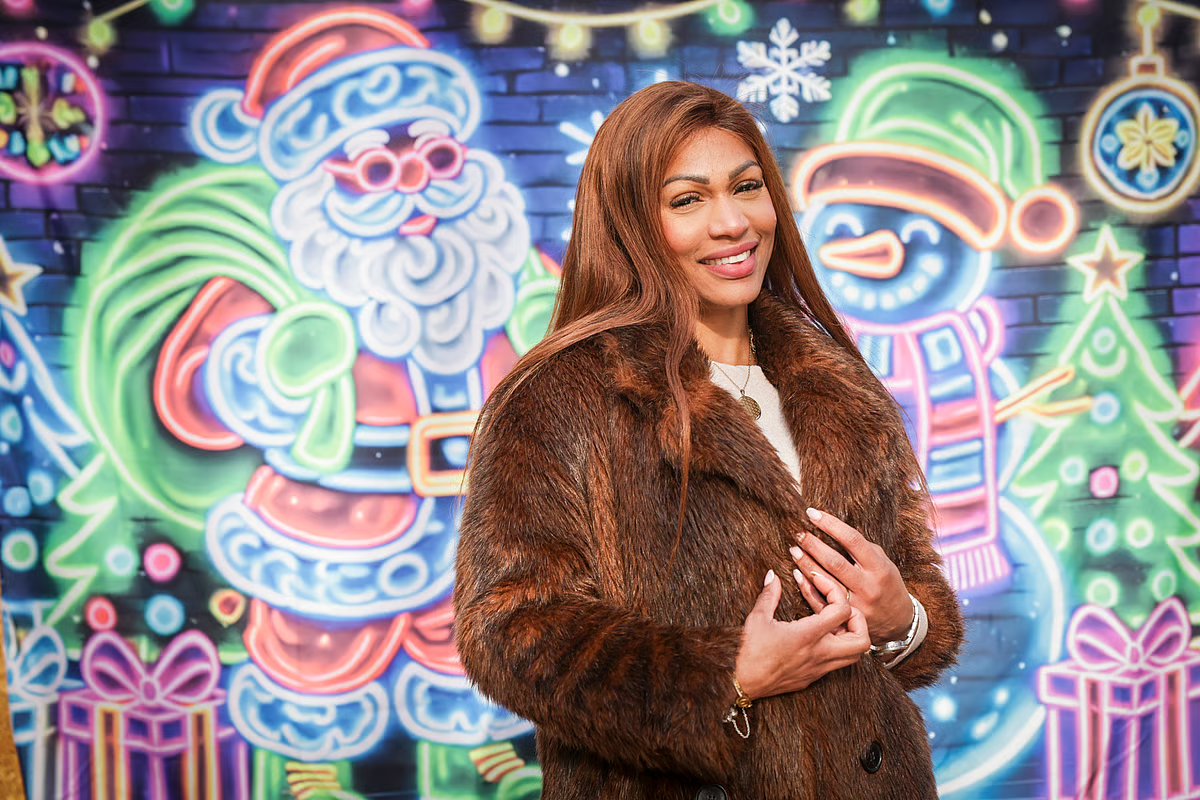

The image he keeps is that of an available table and a generous house, ready to welcome anyone who needed to feel that Christmas was different from other days.. “So it was a banquet, it was a party, full table, laughter, games until late”reports Ivanilda, adding that “Christmas in Cape Verde was something that had a big impact”. The passage of time, however, also brought a more distant reading of these experiences. “Today I look and say: I don’t see the Christmas that I was. That in the past I could taste, feel.”
In Lisbon, Christmas is experienced differently, but it is still significant. “Christmas here is also very good,” he says. The difference may have something to do with culture and age, because, he notes, “Cape Verde had that emphasis, because children live with more intensity. Adults are much more rational.” Still, sharing remains at the center of the celebration. “I share it with my family, with my son, my nephews, who I also say are my children.”
Her son is now 20 years old, but Ivanilda smiles when she says that “he is still a child” and continues to live Christmas with enthusiasm. The presence of younger children in the family helps to revive this magic. “I have a six-year-old niece who also loves Christmas, the unwrapping of gifts.” And he confesses: “I am also enchanted and enter into this magic of Christmas, because I like being a child.”
At the table, the differences between Cape Verde and Portugal become blurred. “In terms of food, it’s more or less the same”, he explains, while talking about roast chicken, cod and abundance, because, he remembers, his “mother cooked a bountiful table.” Historical heritage explains part of this similarity. “Cape Verde, mainly Santiago Island, was colonized by the Portuguese. So, this habit was taken there a long time ago”, he explains.
Still, there are flavors that are left behind. Ivanilda remembers, with nostalgia, “papaya jam, which we eat with cheese”, typical of Cape Verdean Christmas and difficult to find in Portugal. In music, the bridge between the two countries remains alive, because funaná continues to be present at family celebrations, side by side with canonical Christmas songs. “When we play, we end up taking the opportunity to put on a funaná, to play, to get the kids dancing”he says, while placing one hand on his abdomen and the other away from his body, as if he were dancing.