
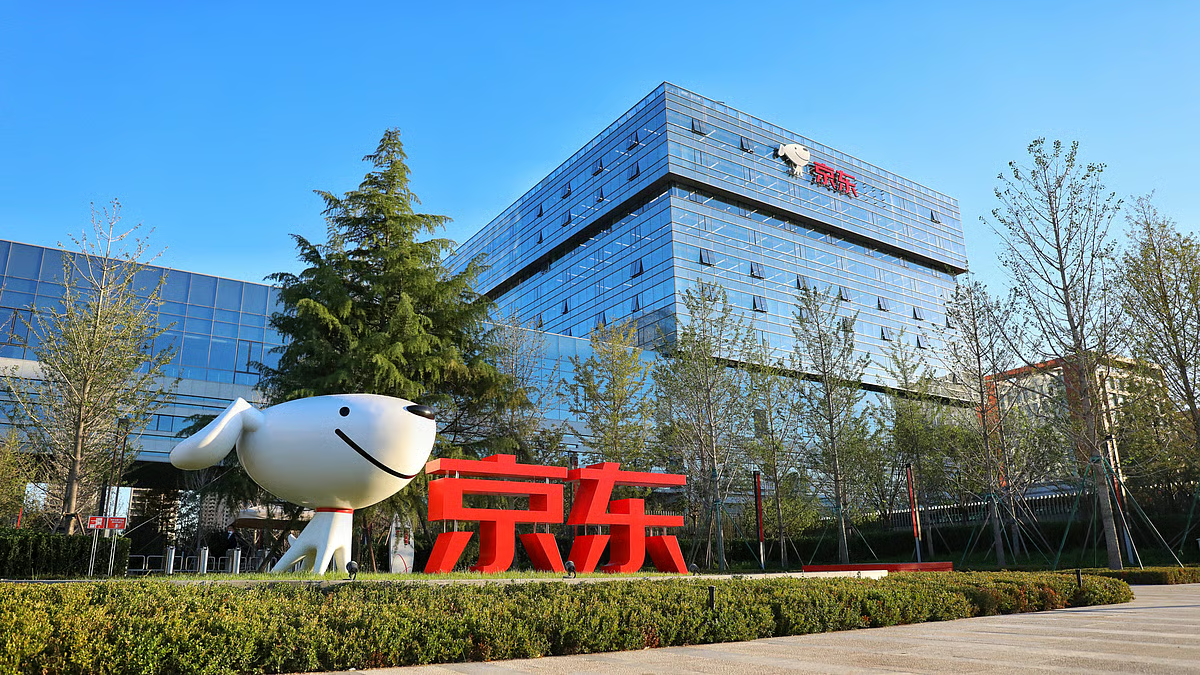

Chinese e-commerce giant JD.com announced this Friday, the 12th, an investment of 22 billion yuan (2.6 billion euros) to provide 150,000 homes for its couriers, in the face of increasing competition and scrutiny from authorities.
According to a statement published on the company’s official account on the WeChat platform, JD.com has already provided around 28,000 accommodation units in the peripheral district of Tongzhou, in Beijing.
The new money will be channeled towards renting, own construction and housing support funds for workers in the delivery sector.
The measure comes at a time of strong rivalry in the sector, marked by the aggressive entry of “instant commerce” – led by Alibaba – which has expanded fast deliveries not only to food, but also to clothes and other products usually delivered over longer periods of time.
Recently, another giant in the sector, Meituan – known mainly for meal deliveries – announced a 10 billion yuan (around 1.2 billion euros) plan with the same objective, also including benefits such as medical insurance extended to family members and support for parenting.
Increasing competition has generated a real war of discounts and subsidies for customers, which has led Chinese authorities to demand that technology platforms put an end to what they classify as “irrational competition”.
The new investment comes within a context of growing public attention on the difficult working conditions of couriers, who often earn less than one euro per delivery and face strenuous work schedules, with few rest breaks.
The debate intensified after several highly publicized incidents. In Wuhan (center), a courier threatened a customer with a knife; in Hangzhou (east), another damaged a fence while speeding to meet a delivery deadline and was forced by security guards to kneel as punishment, which sparked protests from dozens of colleagues.
The work of couriers has become a symbol of urban precariousness in China. One of the biggest box office hits of 2024 was precisely a film focused on the difficulties faced by these temporary workers, who travel on electric motorbikes to deliver orders in the shortest possible time.
In China’s big cities, it is common to see them driving the wrong way, crossing red traffic lights or speeding along sidewalks, dodging pedestrians to meet deadlines.
At the end of 2024, authorities ordered digital platforms to review algorithms, paying particular attention to those that automatically shorten delivery times – a practice that increases pressure on couriers and contributes to traffic violations and accidents.
Shortly afterwards, Meituan announced that it would require workers to take mandatory rest when excessive working hours were detected.