
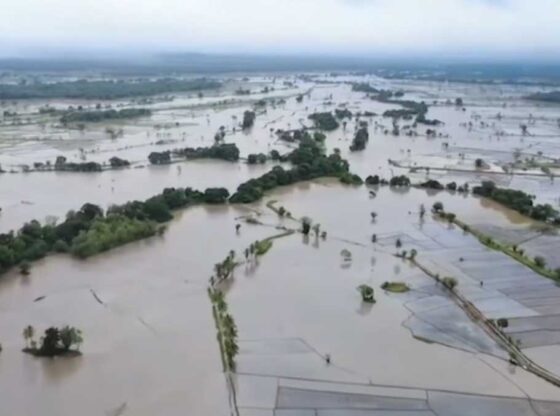

ECONOMYNEXT – Cyclone Ditwah had inundated 1.1 million hectares or 20 percent of the island and triggered 1,200 landslides, a study by the United Nations Development Program has round.
“The floodwaters reached nearly 720,000 buildings, about one in every twelve buildings in the country,” the report said.
“Over 16,000 kilometres of roads, enough to circle the island’s coastline more than twelve times, were exposed to flooding. Similarly, over 278 km of railway tracks and 480 bridges were located in flooded areas.”
Sri Lanka has 12,000 kilomtres of main road (A and B grade) under the Road Development Authority but many more small roads under local authorities.
“After one of its worst economic crises and a slow but steady recovery underway, Sri Lanka cannot shoulder more debt to cover the costs of a rebuild from this massive natural disaster,” Azusa Kubota, UNDP Resident Representative in Sri Lanka said in a statement.
“International partners must step up with affordable financing and innovative instruments that enable a rapid recovery and rebuilding with greater resilience, without the country falling off the debt cliff.
“UNDP with the UN family is working with government, our partners and communities, to support those most affected through immediate relief and early recovery efforts.”
The cyclone was unusual in that it was a first level weather system without strong winds, which usually devastate tree crops like coconut and trees bring down power and telephone lines.
This time most of the destruction came and many deaths from a severe type of landslides (debris flows) which swept down hillsides along with villages and vegetable after prolonged rain,
The cyclone which very slowly northwards across Sri Lanka.
The exposed population includes approximately 1.2 million women, 522,000 children and 263,000 older persons, with over 60 percent of all exposed people living in just two districts (Colombo and Gampaha), the report said.
Colombo and Gampaha, which were in the lower reaches of Kelani and Aththanagalu Rivers went under. Some areas of Colombo go under water every year with knee high water.
“Many in affected areas across the country live in high-risk, disaster-prone areas, requiring a permeant solution,” the UNDP statement said.