
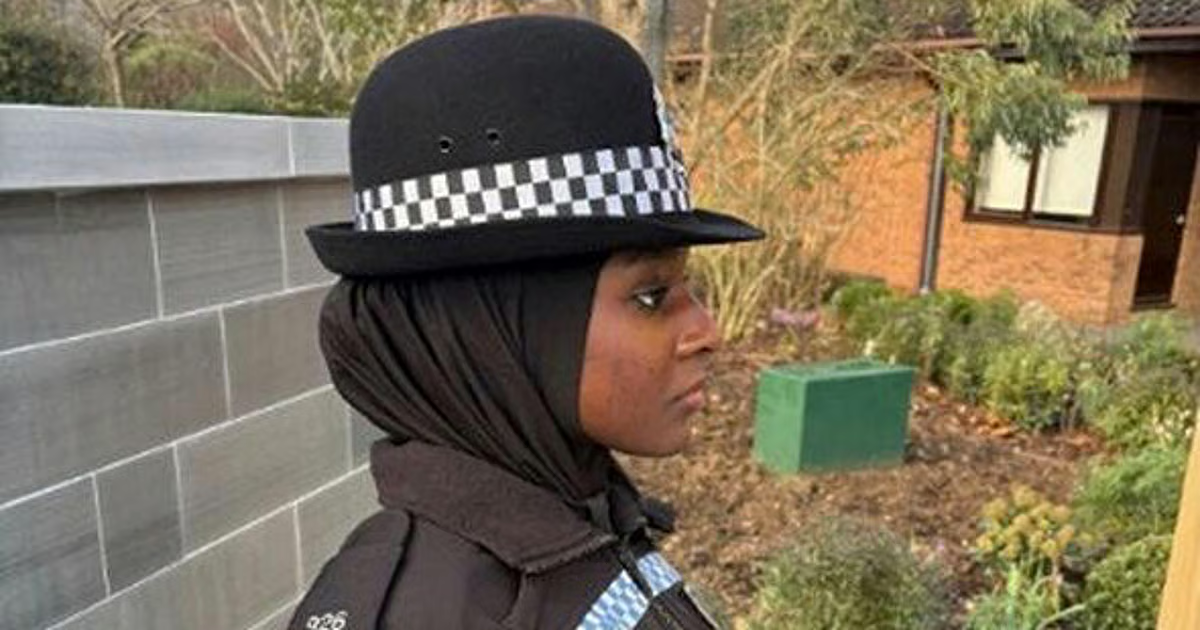

Leicestershire Police, in the United Kingdom, this month officially implemented the “Blue Light Hijab”, a pioneering piece of protective equipment designed specifically for Muslim officers in operational roles. After a period of three years of intensive development, the accessory becomes part of the official uniform, with the aim of combining respect for religious freedom with the security standards of modern policing.
The new model uses a patented magnetic fastening system that allows the veil to detach instantly if pulled by a suspect during a physical altercation. This technical functionality solves a safety problem for police officers: the risk of strangulation associated with conventional or pinned hijabs. The design, made up of two pieces, ensures that, even if the outer part comes loose under pressure, the agent’s privacy and dignity are preserved, as the hair remains covered, describe its creators and the British authorities
Investment and economic viability
The development of the “Blue Light Hijab” was the result of a partnership between security forces and De Montfort University (DMU). It is estimated that the total investment in the research, prototyping and resistance testing phase reached 500,000 pounds (around 600,000 euros), financed by public funds intended for the modernization of police equipment.
When officially classified as Personal Protective Equipment (PPE), the cost of each unit is fully covered by the budget of the respective police forces, without any charge to the officers.
Mass production has been entrusted to local textile companies in Leicester, a measure that aims to simultaneously support the regional economy and ensure the sustainability of the materials used.
Impact on recruitment
For the British authorities, this innovation transcends the technical component, functioning as a tool in the recruitment strategy. The police hope with this new uniform to attract a greater number of women from Muslim communities to the frontline.
“I feel safe and, above all, empowered”, agent Hafsah Abba-Ghana, one of the first recruits to use the new model in operational service, told the media. “Knowing that the institution has invested in equipment that respects my identity and protects my physical integrity allows me to focus exclusively on the mission of protecting the community.”
The success of the initiative in Leicestershire has already sparked the interest of other emergency sectors in the UK, including the National Health Service (NHS) and several paramedic teams, who are now evaluating the adoption of this magnetic technology for their own staff.