
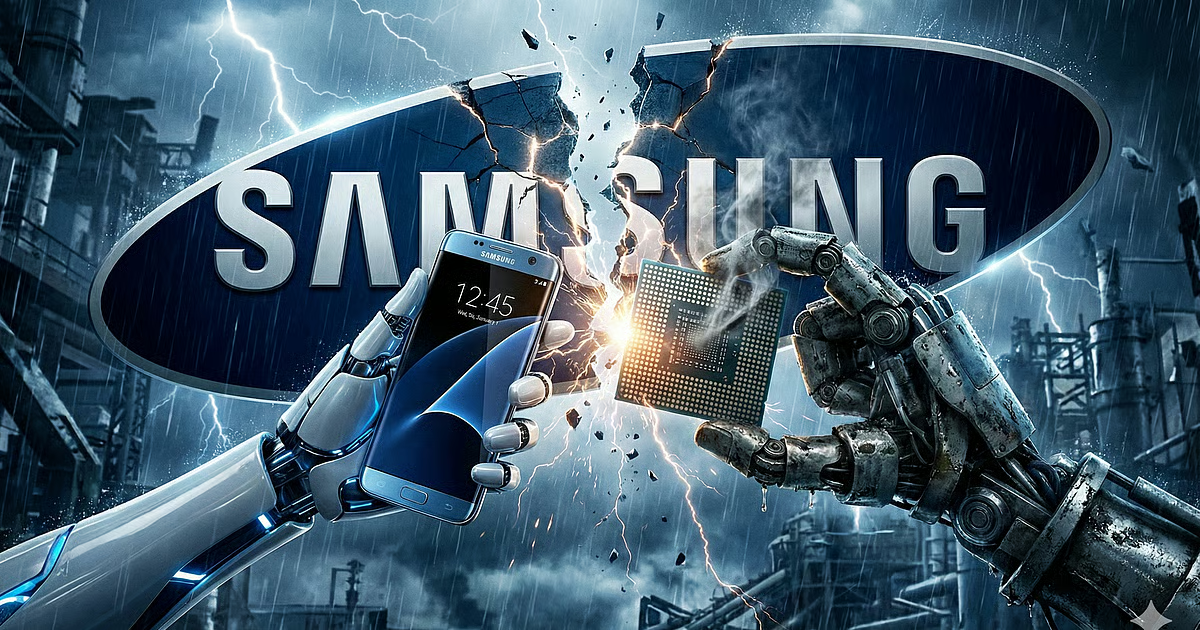

Samsung Electronics, once the perfect example of vertical integration in the technology world, is experiencing an unprecedented supply crisis. The Cell Phone Division (Mobile eXperience – MX) is, in practice, unable to purchase crucial components from its “sister company”, the semiconductor division (Device Solutions – DS), due to a lethal combination of production incapacity and commercial positioning.
The first moment in this crisis is the failure of the Exynos 2500 processor. Samsung Foundry was unable to stabilize its 3 nanometer (3nm) manufacturing process, with industry reports indicating very low yield rates – in some cases, less than 20% or 50%. This means that the factory cannot deliver chips functional in sufficient volume. As a result, the mobile division was forced to cancel the internal purchase and order all the processors for the Galaxy S25 from rival Qualcomm. By paying around 190 to 200 dollars (approx. 162 to 170 euros) for each Snapdragon 8 Elite, Samsung Mobile loses its biggest competitive advantage: the low cost of the hardware owner, according to the specialized publication PhoneArena.
To make this scenario worse, the blockade now extends to memory, the “bread and butter” of the South Korean giant, the world’s RAM supplier. Data published by the international press reveals that the Semiconductor Division refused to renew annual contracts for the supply of DRAM memory with the mobile phone division, motivated by the explosion in demand for memory for Artificial Intelligence (HBM), which offers much higher profit margins. The consequence? The mobile division was forced to accept quarterly renegotiations, being exposed to volatility and premium prices on the open market, just like any external customer.
The scenario is a “perfect storm” for the management of Samsung Mobile: they cannot buy the “brain” of the cell phone at home because the factory cannot produce it, and they cannot buy the “memory” at stable prices because the neighboring division prefers to profit from NVIDIA and data centers.
An internal supply crisis that puts immense pressure on the final price of devices.