
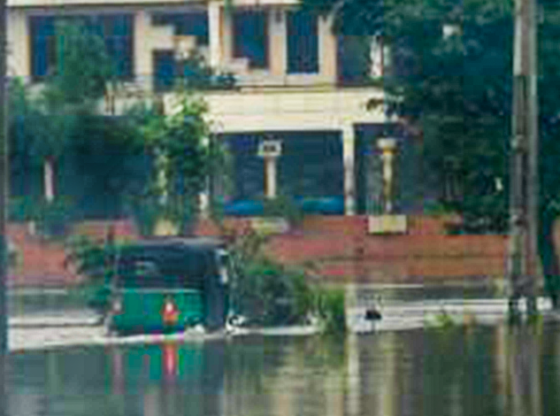

ECONOMYNEXT – When Cyclone Ditwah tore through Sri Lanka, unleashing catastrophic floods and landslides that buried entire communities in some areas and paralyzed the nation’s economy, it was followed by an unexpected wave, one of empathy, diplomacy, and global solidarity.
Within hours, aircraft, ships, and relief caravans bearing foreign flags began touching down on Sri Lankan soil.
Donations surged, international rescue teams arrived, and world leaders issued statements of support.
What unfolded was not only a massive humanitarian response but also a revealing display of global geopolitics, strategic positioning, and the international community’s long standing emotional connection with Sri Lanka.
Diplomacy and Geopolitics
In the wake of Ditwah’s devastation, the humanitarian response turned into an indirect showcase of geopolitical interests in the Indian Ocean.
Sri Lanka’s strategic location, astride some of the busiest maritime routes in the world, meant that disaster assistance was more than just goodwill. It was also diplomacy in motion.
The early rush of aid provided an opportunity for global powers to strengthen ties with Colombo.
Countries sought not only to deliver relief supplies but also to signal political intent.
For South Asian nations, helping Sri Lanka was a matter of regional responsibility. For major powers such as the United States, China, and Japan, it was a chance to reaffirm influence in a region increasingly characterized by strategic competition.
Sri Lankan diplomats, meanwhile, found themselves navigating a complex landscape, grateful for the support yet cautious of the political strings that often accompany large-scale foreign aid.
Nevertheless, the crisis opened a diplomatic window for renewed engagement, giving Colombo leverage to reset or reinforce relationships that had grown strained in recent years.
Poured in Aids
While dozens of countries sent some form of aid, a handful stood out for the scale, speed, and sophistication of their response.
India was the first to mobilize. Within 24 hours, New Delhi dispatched medical teams, emergency rations, water purification units, and rescue gear in its naval ship that was already docked in Colombo before sending more ships. Helicopters were flown in for aerial search operations in landslide-hit areas. India’s quick reaction earned widespread praise, reinforcing its longstanding role as Sri Lanka’s first responder during crises.
The United Arab Emirates emerged as another major contributor, surprising many with the size of its operation.
Japan, known for its quiet but consistent humanitarian presence, sent specialized disaster-rescue personnel, portable flood barriers, emergency generators, and financial assistance for early recovery.
The United States delivered large consignments of food, shelter kits, hygiene packs, and satellite communication systems to help restore coordination networks damaged in the storm.
China, balancing both optics and impact, sent a combination of cash, medical supplies, engineering units, and heavy machinery to clear blocked highways and restore critical infrastructure.
International NGOs from the Red Cross to Save the Children also played a defining role. Their pre-existing presence in Sri Lanka enabled them to scale up rapidly, often reaching remote villages before state agencies could get there.
India vs Pakistan
Amid the global outpouring of support, an unexpected diplomatic wrinkle emerged between India and Pakistan, the two rivals whose tensions often spill into regional affairs.
Pakistan, eager to demonstrate solidarity and compete with India’s early presence, announced plans to send a military-led humanitarian contingent. The Sri Lankan government welcomed the offer publicly, but behind the scenes, Indian officials expressed concern, officials say. New Delhi preferred that the island remain free of unnecessary military footprints from a rival country, especially during a crisis.
The situation became delicate when Pakistan’s relief aircraft faced delays due to “logistical clearances,” widely interpreted as airspace and coordination issues linked indirectly to India. Pakistani media criticized what they called “politicization of humanitarian assistance,” while Indian officials argued that they had already given approval.
Sri Lanka, caught between two strategic partners, sought to diffuse the tension by emphasizing that all aid was welcome while privately assuring both countries of neutrality. Ultimately, Pakistan’s assistance arrived with mostly medical supplies and disaster-relief tents, but the episode exposed how even humanitarian efforts cannot escape the gravitational pull of subcontinental politics.
UAE’s Unprecedented Assistance
Perhaps the most surprising relief operation came from the United Arab Emirates, whose response surpassed expectations in both scale and urgency.
Historically a significant partner to Sri Lanka, particularly through migrant employment and investment, the UAE elevated its support to an extraordinary level after Ditwah.
The UAE dispatched an airlift operation that included:
- Multiple C-17 aircraft carrying medical equipment, desalination units, and prefabricated shelters
- Specialist urban rescue teams trained for landslide and flood environments
- A mobile field hospital capable of treating hundreds per day
- Charter flights transporting tons of food, water, and emergency aid
In addition, the UAE government announced a substantial financial grant to Sri Lanka’s Disaster Management Centre and pledged reconstruction support for damaged schools in rural districts.
Humanitarian experts noted that the scale of this effort placed UAE among Sri Lanka’s top three disaster responders in recent memory. The operation improved its public image in South Asia and reinforced its growing global reputation as a humanitarian power.
Japan, the U.S., and China
Japan maintained its tradition of being one of Sri Lanka’s most dependable partners in times of disaster. For decades, Tokyo has supported the island during tsunamis, floods, and conflicts. This time, Japan deployed its Japan Disaster Relief (JDR) teams, highly trained specialists in search, medical care, and engineering.
Japan also pledged funds for rebuilding community water systems and restoring early-warning technologies damaged during the storm.
The United States leveraged its robust humanitarian network. Satellite imagery and mapping support proved critical in guiding Sri Lankan authorities to landslide-prone zones.
U.S. funding also helped international agencies procure shelter materials and emergency nutrition for thousands displaced.
China, while slower to mobilize initially, delivered substantial assistance that showcased both soft power and logistical capability. Beijing sent heavy machinery including excavators, loaders, and engineering units to clear debris and rebuild washed-out bridges. China also provided direct financial aid and partnered with Sri Lanka’s military to distribute supplies in remote districts cut off by the floods.
Together, the three countries demonstrated that disaster diplomacy remains a cornerstone of their relationships with Sri Lanka, each leveraging their unique strengths.
Soft Corner for Sri Lanka
Beyond geopolitics and strategy, the global empathy toward Sri Lanka stems from deeper, historical reasons.
The island has long cultivated a reputation as a peaceful, culturally rich nation with warm people and strong international ties. Its struggles from the 2004 tsunami to years of economic difficulty have drawn sympathy from countries that see Sri Lanka as a small nation constantly attempting to rise above adversity.
The Sri Lankan diaspora, spread across Europe, the Middle East, and Asia, plays a major role in amplifying the island’s needs during crises. Their mobilization after Ditwah such as organizing fundraisers, coordinating shipments, and lobbying foreign governments helped channel global attention rapidly.
Moreover, Sri Lanka’s consistent participation in UN peacekeeping missions has earned it goodwill, analysts say. Many nations view the island as a contributor to global stability, deserving of support during hardship.
Ultimately, Sri Lanka evokes a sense of familiarity and moral responsibility. For many, extending help to the island feels not only diplomatic but deeply human.
In the aftermath of Cyclone Ditwah, as Sri Lanka slowly rebuilds homes, roads, and shattered lives, the story of international assistance serves as a reminder of the world’s capacity for compassion. Amid geopolitical rivalries and diplomatic sensitivities, what prevailed was the urgent recognition that when a small island nation is pushed to the brink, the world can and often does reach out with an open hand. (Colombo/December 10/2025)
Continue Reading