
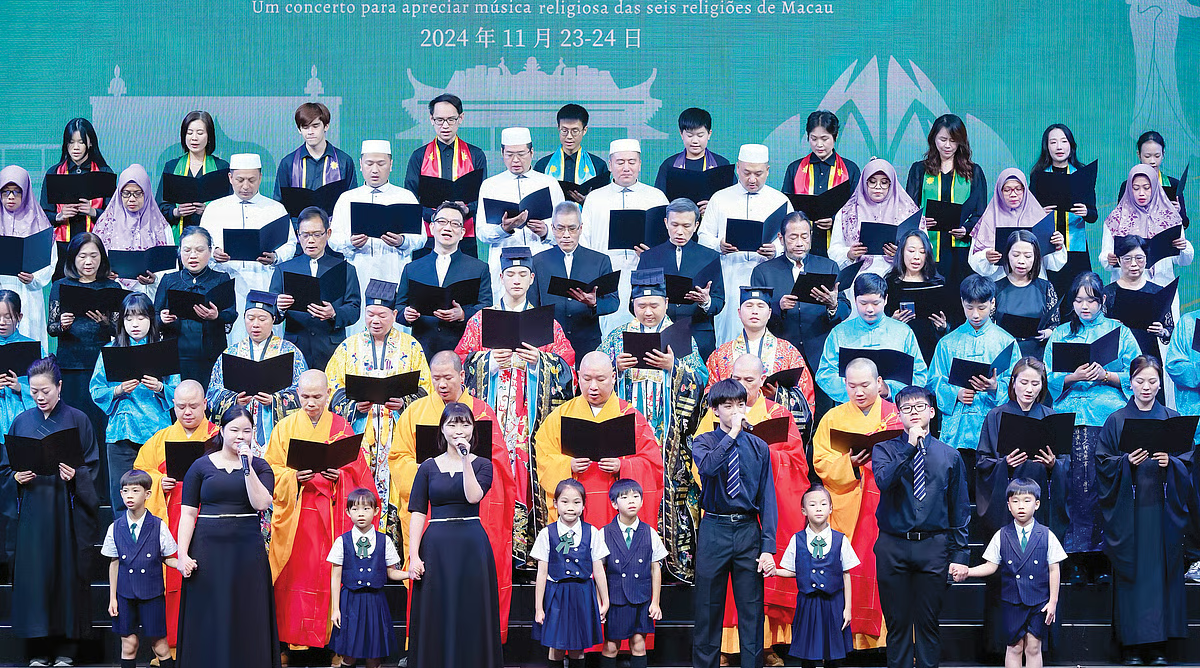

Since 2021, six religions – Buddhism, Catholicism, Taoism, Protestantism, Bahá’í Faith and Islam – have come together consecutively for five years, organizing concerts, art exhibitions, youth exchanges and other events, together promoting a harmonious environment. This memorable scene recalls the joint blessing performed by four religions during the opening ceremony of Macau International Airport in 1995, becoming a reference in the international religious panorama.
Organized by six religions, the contemporary art exhibition Luz Que Funde Sem Palavras, Macau Harmonioso was inaugurated with pomp at the Kun Iam Temple, with almost 400 years of history, in November 2025. During the inauguration, the venerable master Shi Jiecheng, president of the General Buddhist Association of Macau, explained that art serves as a spiritual bridge that transcends doctrinal limits, citing the Avatamsaka Sutra: “The mind is like a painter skilled, capable of painting all worlds.” In turn, D. Stephen Lee, Bishop of Macau, citing the Catholic encyclical God is Love, emphasized that “charity goes beyond the limits of the Church”. Despite different doctrines, the two leaders showed a high degree of understanding regarding spiritual pursuit and social responsibility, vividly reflecting the true essence of religious harmony in Macau.
This city, measuring just over 32 square kilometers, was historically a crucial meeting point between Chinese and Western cultures. From the Temple of A-Má to the Ruins of Colégio de São Paulo, from Kun Iam Tong to the Church of São Domingos, buildings of different religions stand side by side, representing not only geographic coexistence, but also spiritual exchange. As the venerable master Shi Jiecheng stated: “In front of the Kun Iam hall, six spiritual heritages originating from different civilizations come together in mutual appreciation.” This does not suppress the differences, but it reveals what these traditions have in common.
At the art exhibition, more than 70 works of calligraphy, sculpture and digital art were displayed. The showing of streaming videos next to ancient statues of Buddha, and the holding of digital illustration workshops amid the sounds of morning and twilight bells represented, in themselves, a profound dialogue between religion and contemporary life. Art does not speak, but points directly to the heart; faith does not debate, but finds an echo in aesthetic experience.