
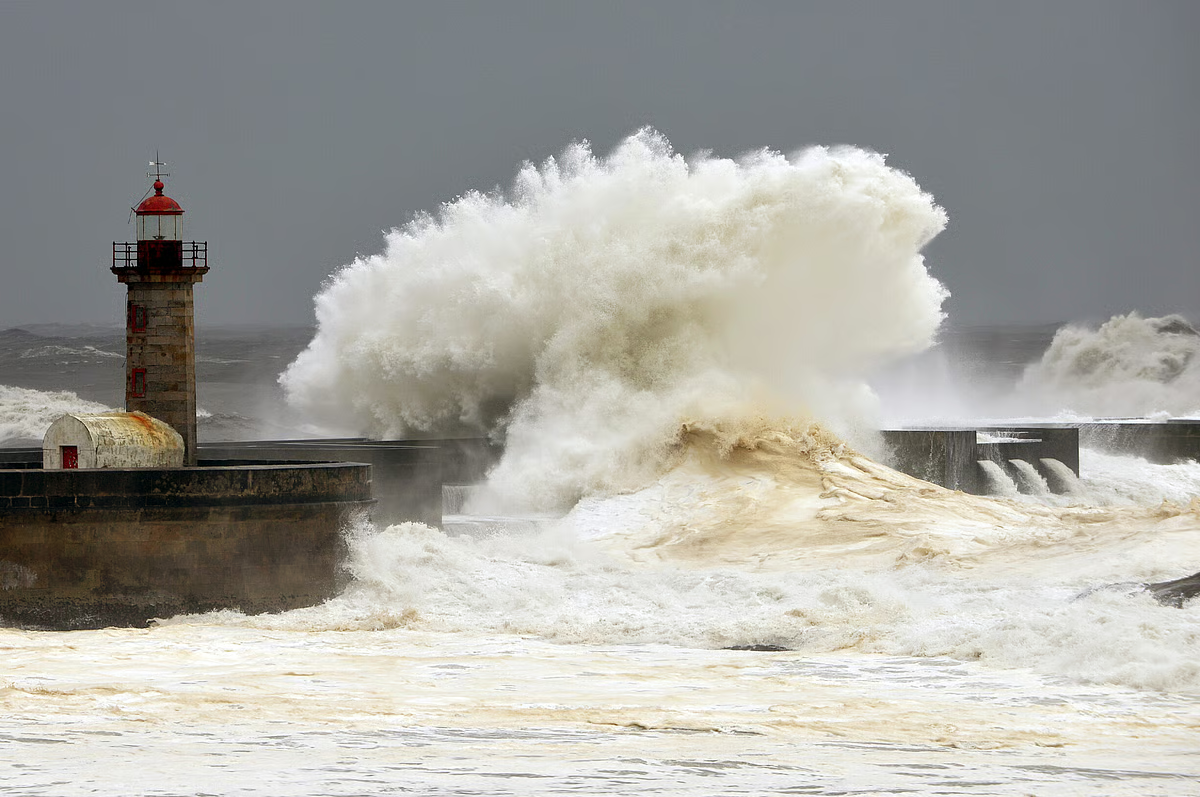

Seven districts of mainland Portugal are this Tuesday, December 2, under orange warning and 10 under yellow warning due to maritime unrest, according to IPMA, which also predicts snowfall in two districts in the northern interior.
According to the Portuguese Institute of the Sea and Atmosphere (IPMA), the districts under orange warning due to maritime unrest are Porto, Braga, Viana do Castelo, Lisbon, Leiria, Aveiro and Coimbra, with waves from the northwest with a significant height of five to six meters, reaching a maximum height of 11 meters, between 6:00 pm this Tuesday and 3:00 pm on Thursday.
The yellow warnings cover periods before and after the orange one, with waves of four to five meters, and also include Faro, Setúbal and Beja.
The orange warning is issued by IPMA whenever there is a “moderate to high risk meteorological situation” and the yellow one, when there is a “risk situation for certain activities dependent” on the weather.
In the northern interior, the districts of Guarda and Castelo Branco are still under yellow warning due to snow, with accumulation of around five centimeters above 1,400 meters and up to 10 centimeters expected at the highest points of Serra da Estrela.
IPMA warns of possible disturbances, such as restricted or closed roads, ice formation, damage to structures or trees and impaired local supplies.
It also recommends that the warnings issued be respected and that preventive measures be adopted, such as reducing efforts outdoors during periods of sea unrest and paying attention to road conditions in areas with snow and ice.
The Directorate-General for Health (DGS) recommended preventive measures on Sunday in light of forecasts of cold weather, especially in the North region, recalling that there is an increased risk of respiratory diseases, worsening of chronic conditions and accidents.
Realizing that the IPMA predicts cold weather for the next few days, with some districts in the North of mainland Portugal registering negative temperatures, the DGS issued some recommendations to the population to protect themselves from the negative effects of the cold on their health.
Recommendations include avoiding prolonged exposure to the cold and sudden changes in temperature, dressing in layers, wearing a hat, gloves and scarf, trying to “not sit for more than an hour at a time” when you are at home, drinking water even if you are not thirsty, consuming soups and hot drinks, avoiding alcohol, increasing your consumption of foods rich in vitamins, minerals and antioxidants (for example, fruits and vegetables), and avoiding fried foods, with a lot of fat or sugar.
The DGS also calls for “reinforced attention to the most vulnerable” such as young children, elderly people, people with chronic illnesses, outdoor workers, people in isolation or homelessness, in addition to suggesting care when exercising outdoors, avoiding intense efforts in the cold and wearing appropriate clothing.