

The Silenced Heart Association, which brings together victims of sexual abuse in the Catholic Church, expressed this Monday, December 1st, “concern and indignation” with the process of analysis and financial compensation, lamenting the lack of information about the global amount to be allocated.
“The Silenced Heart Association expresses deep concern and indignation regarding the conduct of the process of analysis and compensation for victims of sexual violence in the context of the Portuguese Catholic Church”, stated in a statement, accusing the Portuguese Episcopal Conference (CEP) of a lack of “transparency and responsibility”.
The association maintains that, “with each new stage, a pattern of opacity, slowness and disrespect for people who have suffered abuse becomes more evident” and regrets that, to date, “no information has been disclosed regarding the global amount available for reparation for the approximately 90 people already recognized by the Church”.
The association’s statement comes after the VITA Group, created by CEP to monitor situations of sexual abuse in the Catholic Church, announced on Thursday in Fátima that the number of requests for compensation increased to 93 and that the analysis and interview process should be completed at the beginning of 2026 so that CEP can then move on to awarding compensation.
The Silenced Heart Association demands that victims have “immediate and full access to the opinions that concern them, that the compensation process becomes fully transparent, dignified and centered on survivors, and that the Catholic Church in Portugal puts an end to the culture of concealment that continues to compromise truth and justice”.
“Reparation cannot be an administrative farce. It must be an act of responsibility, courage and respect for the lives destroyed”, he highlights, considering that “the process has progressed slowly which, for the victims, translates into anxiety, wear and tear and re-traumatization”.
According to the association, the interviews were carried out “in an excessively inquisitorial manner without access to cell phones, pens or paper by the victims, forcing them to repeat the same reports in sessions that lasted up to eight hours”.
On November 13th, the CEP announced that, until that day, 89 requests for financial compensation had been presented following abuses in the Catholic Church, 78 of which were considered effective.
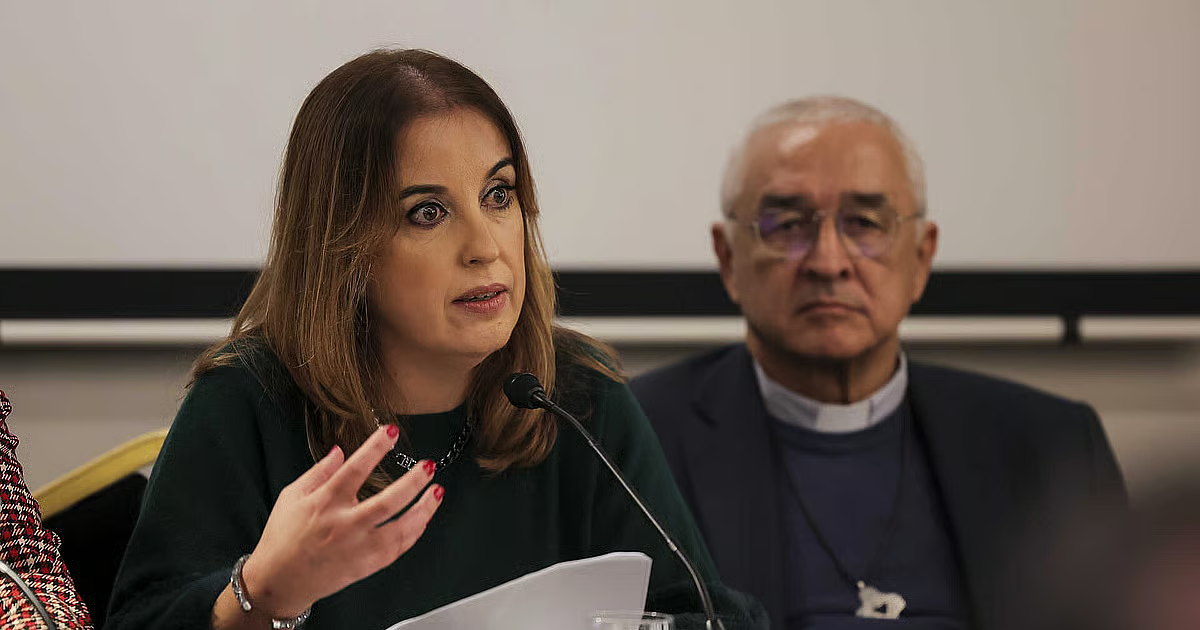
On Thursday, the coordinator of the VITA Group, Rute Agulhas, stated that “effectiveness does not mean that they will necessarily receive compensation”, with the 93 processes being analyzed and studied and, in some of these situations, information from the Church itself is still awaited.
The person in charge also said that the VITA Group was not asked to suggest a financial amount for compensation, but rather “a somewhat transnational analysis”, to understand “what happened in the other countries”.
Cross-referencing this information with national jurisprudence, Rute Agulhas believes that values for financial compensation can be reached.
The VITA Group, created by CEP to monitor situations of sexual abuse in the Catholic Church, presents itself as an autonomous and independent structure, which aims to welcome, listen, monitor and prevent situations of sexual violence against children and vulnerable adults in the context of the Catholic Church.